Categories
Dance

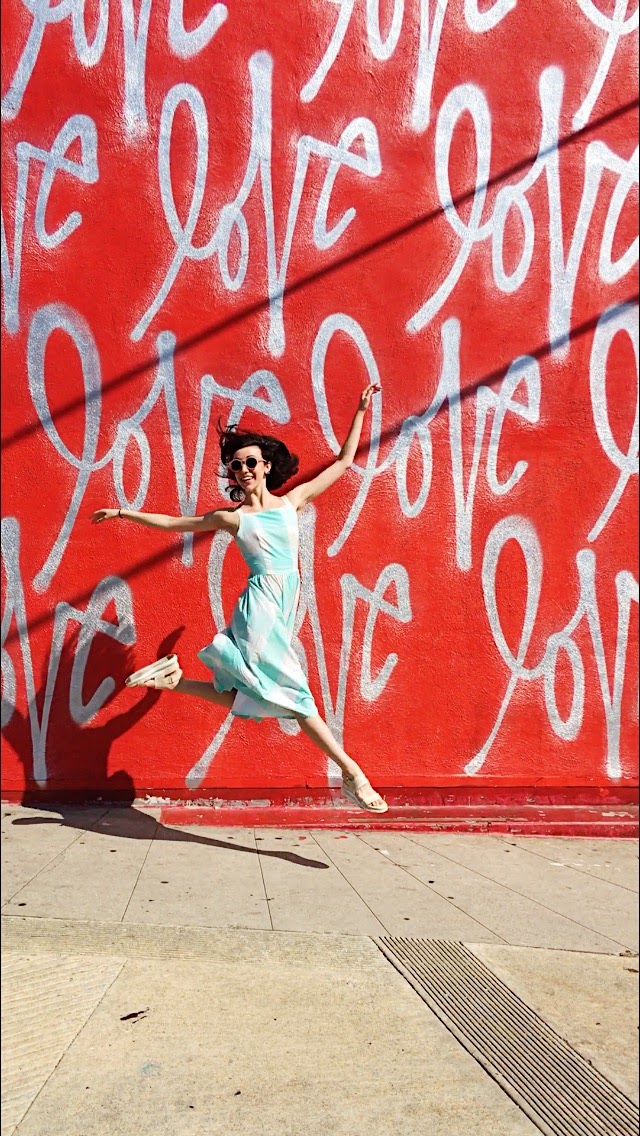
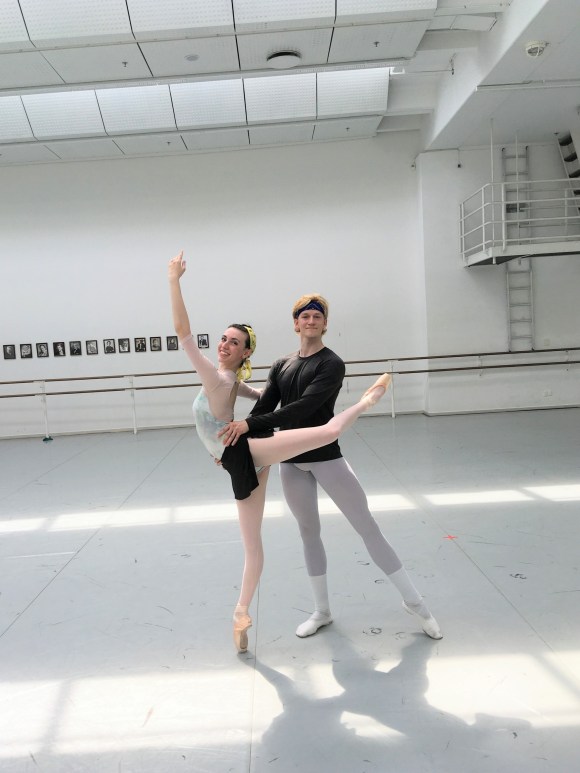
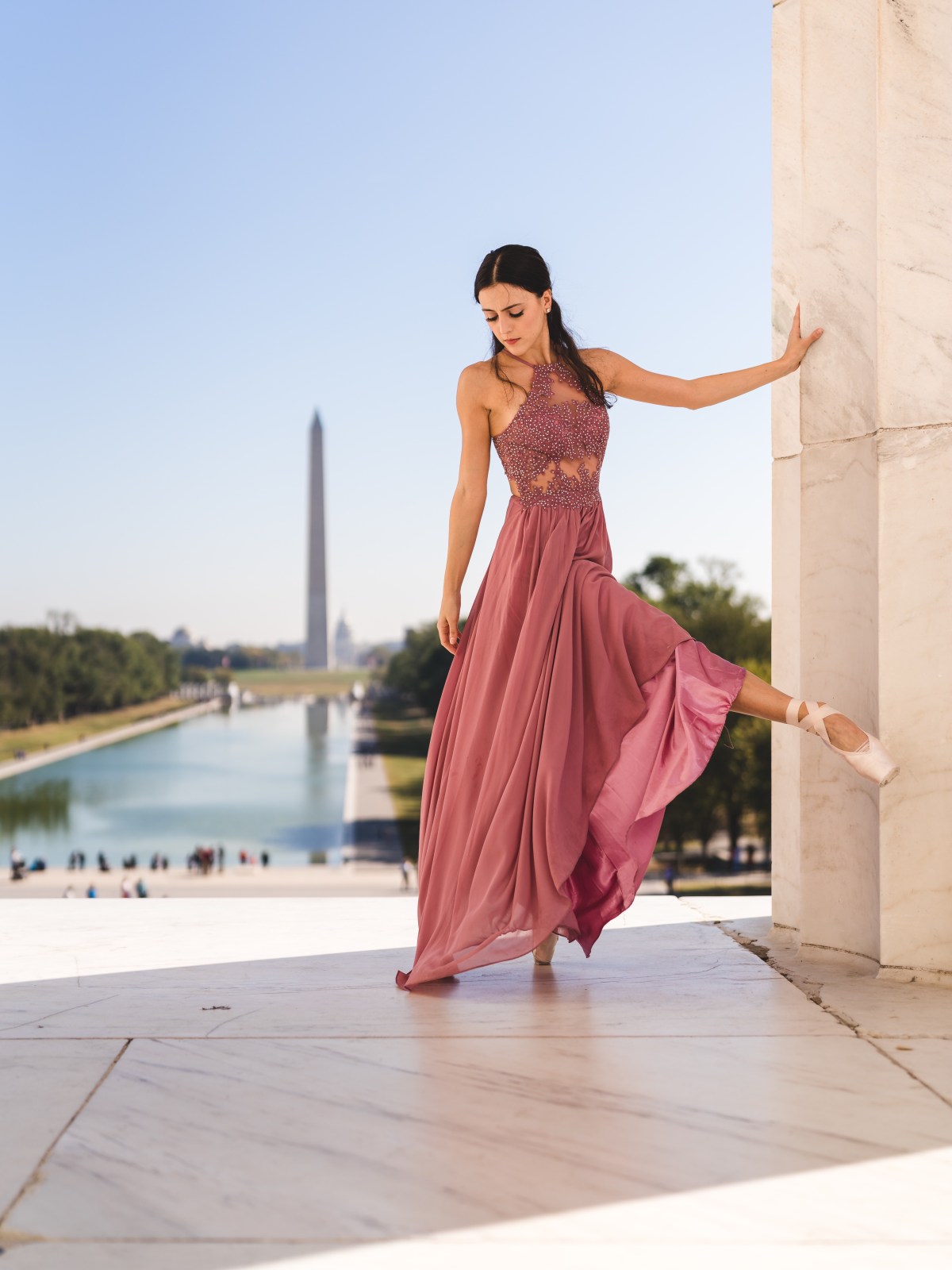
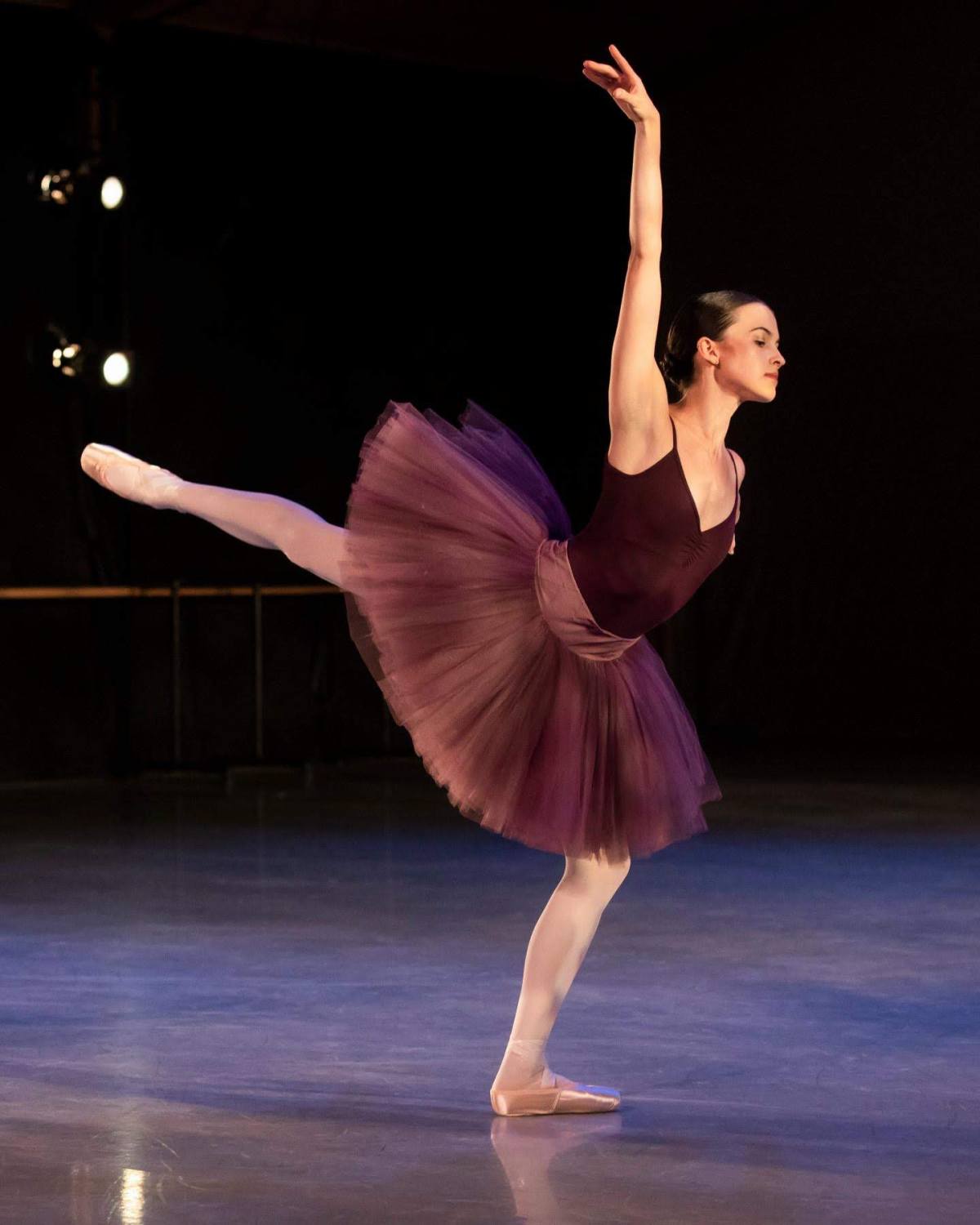
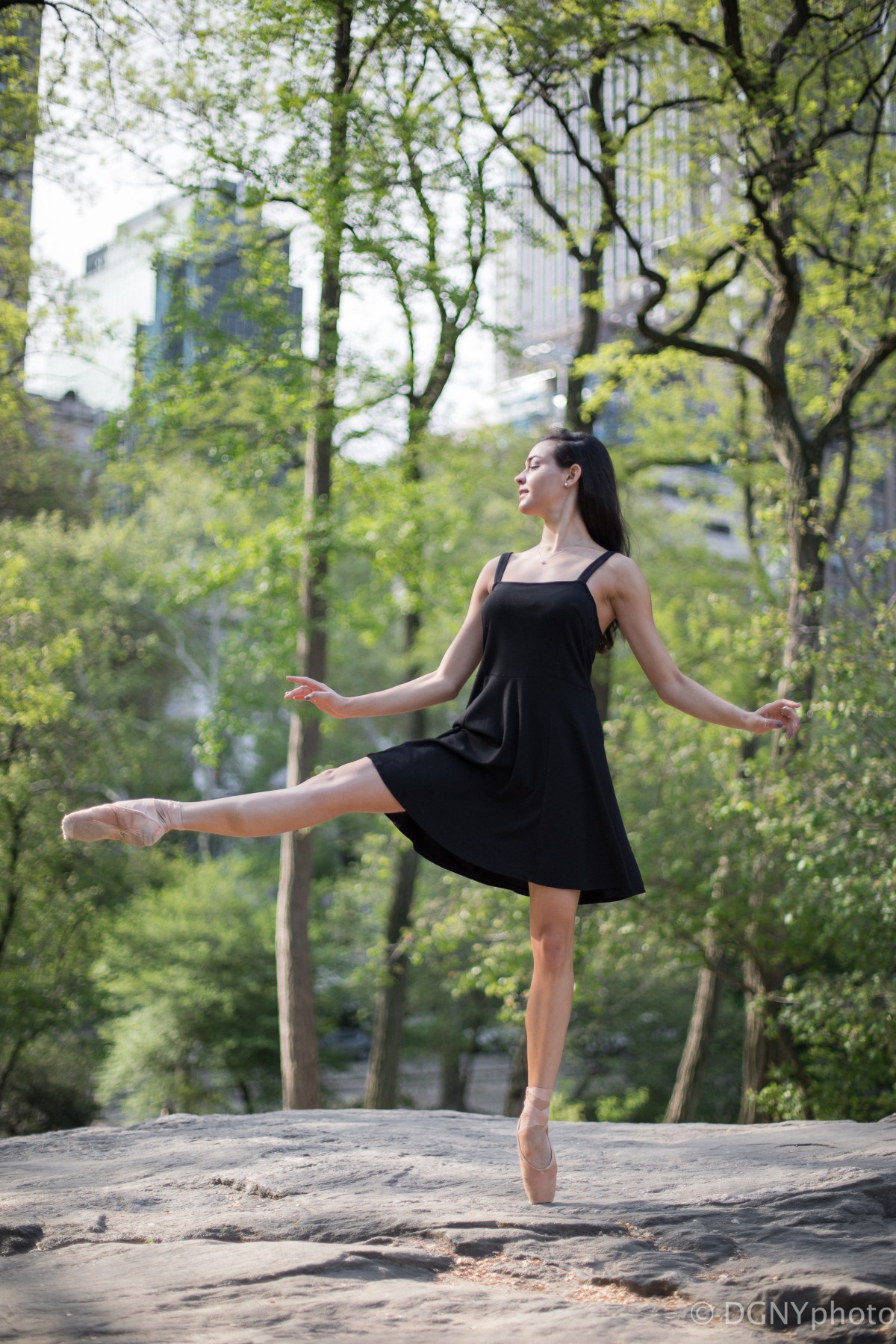
Rachele Perla: An Interview

Rachele Perla, originally from Massachusetts, is a professional dancer with New Chamber Ballet based in New York City. She spent time training at the renowned Boston Ballet School, before earning her bachelor’s degree through the Ailey/Fordham BFA program. She is also currently well on her way to having a Masters of Education through Fordham’s Graduate School program.

1. To get off to an unconventional start, please write a haiku that describes what dancing feels like to you.

passion. giving. grace.
community. comfort. home.
athletic. beauty.

2. How did you get into dancing? How did you become a professional dancer?

I began dancing around the age of five when my parents couldn’t get me to stop dancing around the house (really ironic since we are all back dancing in our living rooms). I trained at my local ballet studio, which gave me incredible performance experience. I think this is what really made me fall in love with the art form. My senior year of high school I was accepted into Boston Ballet School’s Pre-Professional Program. After training there for two years, I graduated from their program in 2015. This is when I would say my path to becoming a professional dancer took an unusual turn. Before graduating high school, I applied to a huge range of colleges, including the Ailey/Fordham BFA Program. I was fortunate to have a lot of options in that moment, but it was also a moment in my life where I was pretty unsure of what path I wanted to take. In the ballet world, it often feels like you have to choose either school or a career. 

After taking a gap year to complete the program at Boston Ballet, I began at Fordham College at Lincoln Center in the fall of 2015. That experience was the most exciting, challenging, and rewarding four years, and I am so grateful it was a part of my path. In the Ailey/Fordham BFA program, academic courses take place at Fordham University and the dance education is in The Ailey School’s Professional Division. While in the program, I had the opportunity to be exposed to a huge range of techniques, styles, choreographers, and teachers. This included the in-depth study of Horton and Graham modern techniques, as well as learning and working with diverse artists. During my time at The Ailey School, I had the privilege of learning about Black history and the Black experience through dance, music, and art, as well as the opportunities to train, learn, and grow alongside so many incredibly talented Black artists. Now, amidst the Black Lives Matter Movement, I can’t help but reflect on how powerful and important that education was.

I graduated cum laude from Fordham University in May 2019, and am halfway towards completing a Masters of Education in Elementary Education/Special Education in Fordham’s Graduate School of Education. Most importantly, the Ailey/Fordham BFA program allowed me the opportunity to begin my professional career while also getting a degree. I began dancing with New Chamber Ballet while still in school. Taking advantage of the incredible opportunities that being a professional dancer in New York City presents, I was able to get professional experience and unique performance opportunities in addition to the intense training and academics of the BFA program. 

3. Did dancing help you through anything difficult in your life?

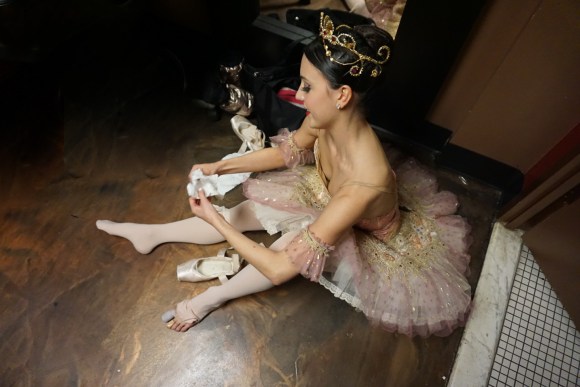
I have been dancing for over 15 years. It has been an incredible source of stability in my life. But, in reflecting, I think I have taken it for granted. The past four months have been extremely difficult for a variety of reasons. In a time in which I have greatly needed the comfort and reliability of art, dance, and movement, it was taken away. I now realize what a significant role this art form plays in my life. That realization, along with the longing to get back into the studios with music and my peers, makes me incredibly grateful that I get to do it everyday.
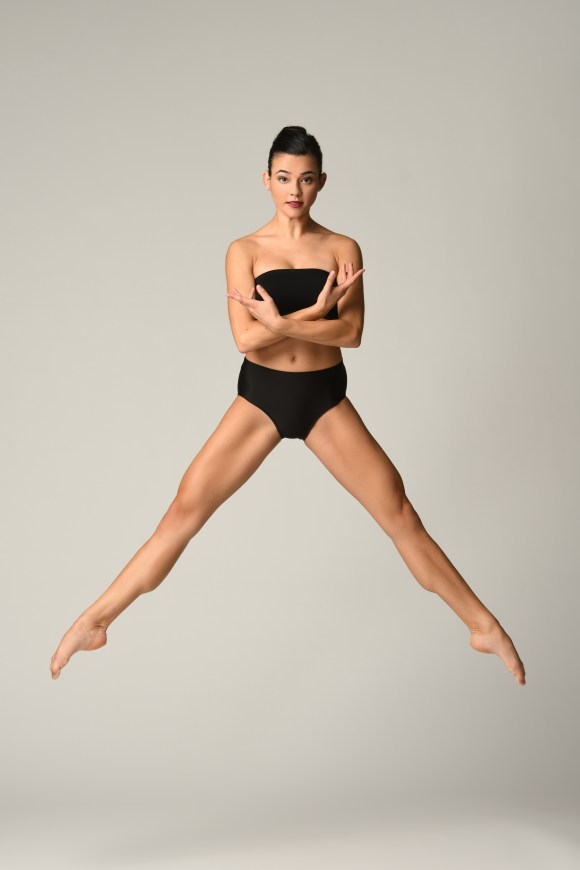
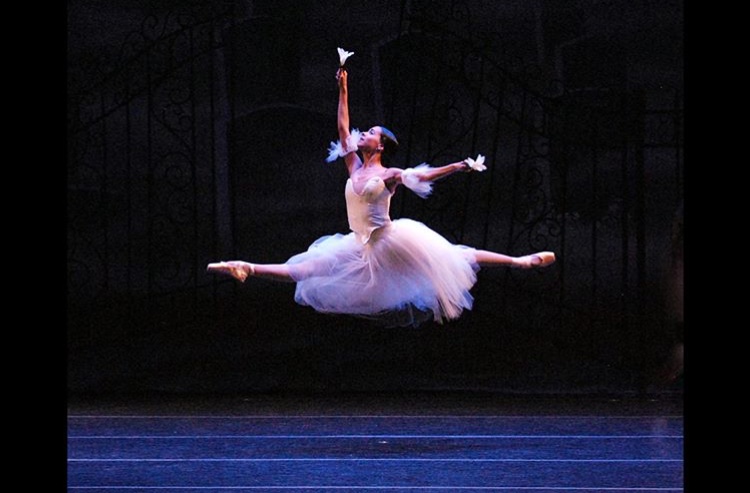
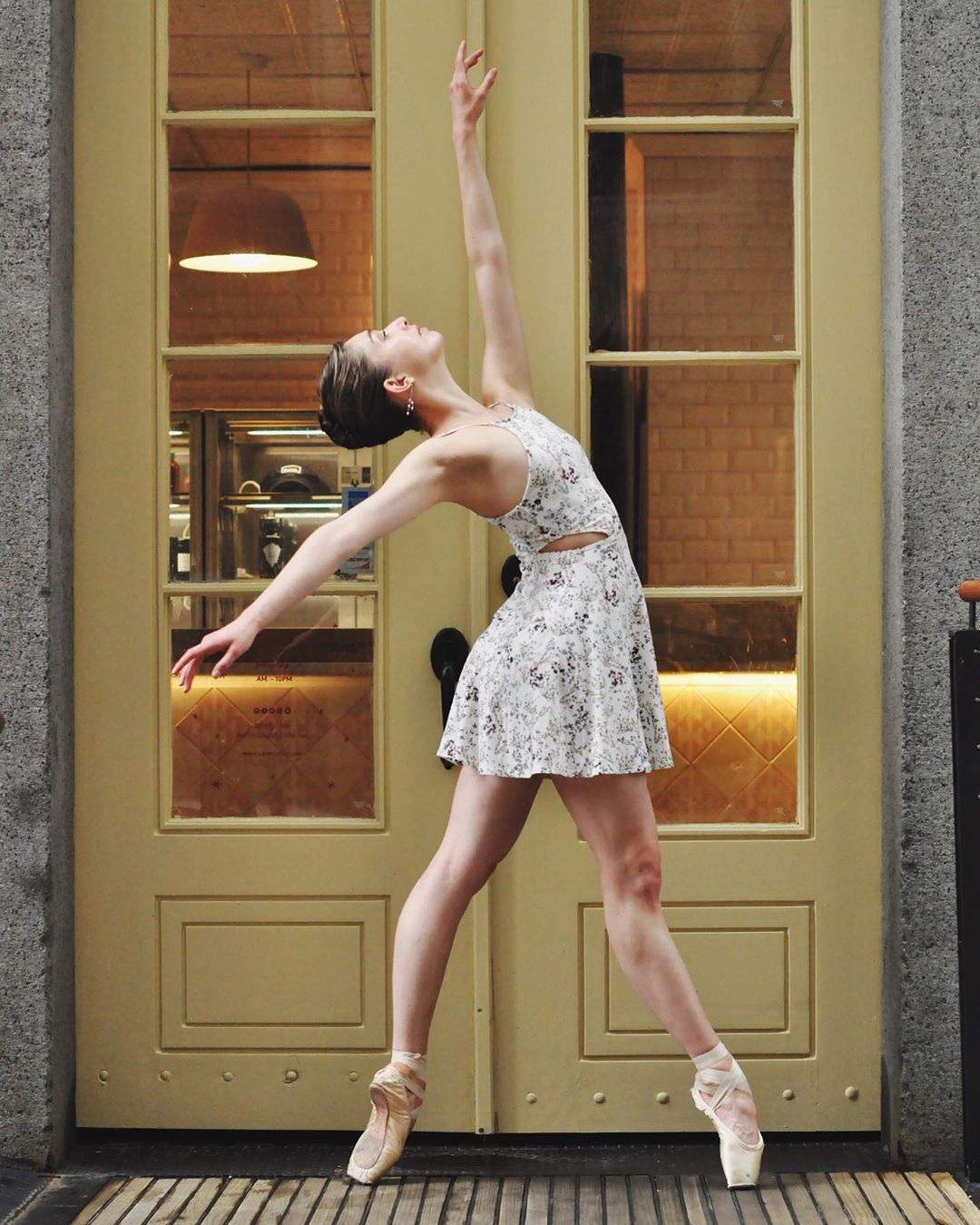
Image: Nir Arieli (Instagram: @nirarieli)

4. What obstacles have you had to overcome to continue pursuing your profession?

This profession takes an incredible amount of perseverance and determination. While I don’t think there is anything specific that I have had to overcome to continue pursuing my art, sustaining that perseverance and determination was a constant challenge throughout my dance education. Learning the importance of advocating for my goals and staying true to them was probably the most important lesson I have learned so far, and has shaped the person and dancer I am today.

5. Tell us your funniest story about the dance world.

While I was at Boston Ballet School, I remember they would ask students to do ‘meet and greets’ dressed as different characters leading up to performances. I remember being so excited when I got asked to do one for The Nutcracker—thinking I would be able to wear a beautiful, sparkly Sugarplum tutu. Nope! Instead they had me dress up as the giant bear. If you know anything about that production, the bear is iconic: head-to-toe full bear! While young Rachele was pretty disappointed, looking back it was definitely one of the funniest moments that brought a lot of laughs! And I had so much fun meeting all the adorable children!

6. In your time as a dancer, what’s the craziest thing you’ve ever had to do/craziest thing that has ever happened to you?

I was performing as a guest artist in The Nutcracker doing Dew Drop a few years ago. Right before my first entrance, I got a really bad bloody nose…So embarrassing, but I made it through the show, fouettés and all! Yikes!

7. What would you say to someone who is hesitant to go see a ballet performance?

Just do it. Go. Bring a friend. Make a night of it. Enjoy live art being created on a stage, and enjoy sharing that moment with others. And you never know, it might just change you.

8. If you had only one sentence to convince someone of the importance of the arts, what would you say?

There is an art form that will reach each and every one of us; look closely and you might find it in unexpected ways.

9. If ballet had a slogan, what would it be? Or if you had a slogan, what would it be?

Let your passion lead you.

Responses edited by Adelaide Clauss
Categories
Dance

Lucy Nevin: An Interview

Lucy Nevin, from Westport, Connecticut, is a professional ballet dancer with The Washington Ballet. From the age of ten onwards, she trained at the official school of New York City Ballet: the well-renowned School of American Ballet. In 2016, Lucy became a trainee at The Washington Ballet and has since ascended to her current position as a full company member. For the past four years, Lucy has managed to juggle her ballet career all while taking college courses in her free time at Georgetown University.

1. How did you get into dancing? How did you become a professional dancer?

I started dancing in this one room studio with wooden floors in Westport, CT. My teacher taught all the children traditional ballet and character. When a choreographer came in from New York City and told my parents that I had real potential, my mom looked up better ballet schools in the area and I auditioned for a few. However, I’d always wanted to be in George Balanchine’s The Nutcracker as I went every year of my childhood, so when I found out I was accepted into The School of American Ballet, I’d made up my mind and wouldn’t choose any other school. I began commuting to New York City to train at The School of American Ballet at ten years old, and eventually graduated from the school at 19 and began my journey with The Washington Ballet as a trainee in 2016. I never doubted my decision to pursue a professional ballet career. I always knew I wanted to be a ballerina.

2. Did dancing help you through anything difficult in your life?

I’ve experienced a lot of anxiety in my life, and that’s just how I’m wired. But dancing has helped me in so many ways: to focus on ballet and not on things that make me anxious, to learn how to manage dealing with what I can and can’t control. Ballet has been my emotional outlet all through my life and changing self-image. Ballet has made me brave and has provided me with a true passion that doesn’t feel like work, but rather a natural daily necessity. If I don’t dance, I don’t feel like myself… and that has really come to light during this time of COVID-19. Though I don’t have to dance everyday, I emotionally have to. My grandma always tells me of the time I told her “I am happiest when I’m dancing.” I was about four years old when I said that and it is still true to this day.

3. What obstacles have you had to overcome to continue pursuing your profession?

Well for starters, COVID-19. Though there have been obstacles like missing out on a normal school life with parties and football games and even the stereotypical college experience, those were all sacrifices I wanted to make to be able to pursue my dream. Another big obstacle for me was missing my littlest sister grow up. I moved away from home when she was only five years old and prior to moving away, I began commuting to NYC when she was two. I really didn’t have the most rewarding relationship with her. 

This global pandemic we are all dealing with is something no dancer ever imagined. We have always had the safe space of a studio to dance in or a stage to perform on, and now we have none of that. I’ve overcome the fear of being alone, not seeing my friends all the time, learning to be okay with “me time,” and knowing that no matter what the circumstances are, I will always have ballet. And now I have time to get to know my little sister and see how she’s grown as a person while I’ve been away. Relationships have become so much stronger for me with my family and friends during this time away from ballet. I think this has boosted my self-confidence a lot and given me strength to keep pursuing my passion because I have so much support and love in my life, and I feel much more gratitude.

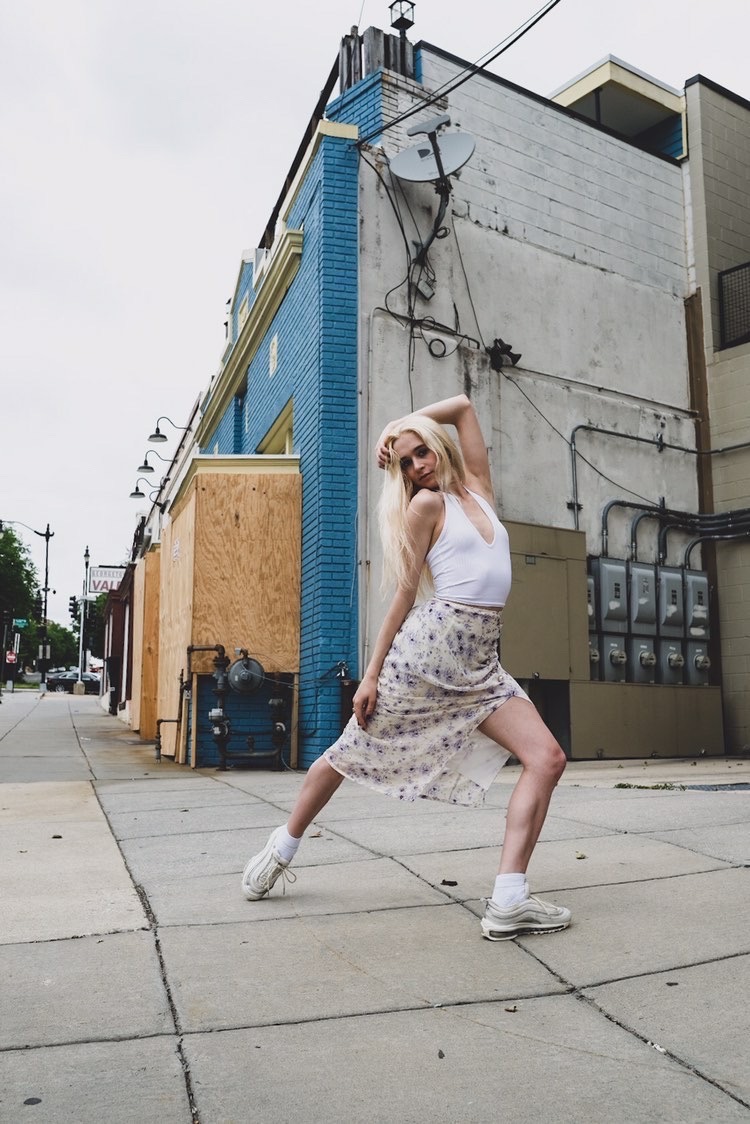
Image: Ru Kuzmickas Photography (Instagram: @rukuzmickas; http://www.rukuzmickas.com)

4. What would you say to someone who is hesitant to go see a ballet performance?

What have you got to lose? Why not? It’s important to expose yourself to things you might not feel the most comfortable experiencing, but if you never try, you’ll never learn and will never grow. So much of what I’ve learned about myself has come from trying new things and surrounding myself in a different environment.

5. If you had only one sentence to convince someone of the importance of the arts, what would you say?

I believe every emotion we feel can be triggered by the arts, and to be human is to feel, and that is beautiful, and that is living.

6. If ballet had a slogan, what would it be? Or if you had a slogan, what would it be?

I love how George Balanchine used to say, “All you have is now.”

Responses edited by Adelaide Clauss

Categories
Dance

Helga Paris Morales: An Interview

Helga Paris Morales, hailing from Puerto Rico, is a professional ballet dancer with the studio company of The Washington Ballet. Helga moved to Cincinnati, Ohio with her family as a child and received the majority of her training from The Cincinnati Conservatory of Music, before going on to join The Washington Ballet’s Professional Training Program. Helga’s dancing prowess is supplemented by her artistic talents as a choreographer, and at 20 years old, she has already created multiple pieces during her time at The Washington Ballet.

1. To get off to an unconventional start, please write a haiku that describes what dancing feels like to you.

Electric feeling
The original language
Rhythm by movement

2. How did you get into dancing? How did you become a professional dancer?

My mom. God bless her. From a young age, I was a very hyperactive child and ironically had an inverted leg. My mom thought it a great idea to burn some of my energy and get therapy through bomba, ballet, and tap classes. She had no idea how much I would end up falling in love with the theater and art form.

3. Did dancing help you through anything difficult in your life?

Absolutely. Dancing, the studio, it has always been an escape for me. It’s been a way for me to siphon emotions, and as a child the studio kept me safe from trauma. This art form has quite literally been my sanctuary.

4. What adversities or obstacles have you had to overcome to continue pursuing your profession?

I think as dancers just thinking about dancing can be an obstacle, haha. I mean, you have to crack and remold your body. Personally for me, it has been the financial investment that ballet requires, as well as just accepting my own self and movement quality. You constantly compare yourself and your abilities to those around you, and forget about your own light. It is certainly a distraction and mental obstacle, not to mention the extra weight of facing adversities as a black woman in this world (period). But you move forward and do everything you can to rise above, because that is the mission.

Image: Jose Gutierrez (Instagram: @errez)

5. Tell us your funniest story about the dance world.

The first time I went on stage in the U.S., it was for a tap recital. I was about 7, and we had to walk on stage and wait for the music. But I was just too darn excited to dance, and in the midst of the wait, I started to break dance for a few seconds only to come to a dead serious stop and actually wait for the music. The moment of silence before the roar of laughter from the crowd. Pretty sure I laughed a little too. Luckily I was only 7 then; I was just so happy to be onstage. I have more self control now 🙂

6. In your time as a dancer, what’s the craziest thing you’ve ever had to do?

Once when we were doing the Waltz of the Flowers in Nutcracker, there was a large piece of costume on the floor, and the craziest thing I have ever done was to try to pick it up, leave the stage, and enter just in time for another entrance. I would like to say that it was nicely finessed, but to be honest that was some craziness. Everyone was looking at it to see who was going to pick it up or kick it off the stage, and about five people missed the costume. I thought I was in a good position to be able to grab it, but really I complicated my life.

7. What would you say to someone who is hesitant to go see a ballet performance?

It’s going to be an experience like no other, and it’ll make you truly appreciate the human body. Also, who can deny some good music?

8. If you had only one sentence to convince someone of the importance of the arts, what would you say?

Like scientists, artists have the responsibility to present observations and direct ideas, conversations, and experiences.

9. If ballet had a slogan, what would it be? Or if you had a slogan, what would it be?

Break to rebuild. 

Edited by Adelaide Clauss

Categories
Dance

Madeleine Purcell: An Interview

Madeleine Purcell is a professional ballet dancer who has danced with Sarasota Ballet, Tivoli Ballet in Copenhagen, and at Oklahoma City Ballet. She received her professional training from American Ballet Theatre’s Jacqueline Kennedy Onassis School and from Ballet Academy East in New York City. Madeleine is also the creator of Little Bird Skirts, a dancewear company that makes highly distinctive and fashionable dance rehearsal skirts and headscarves; as if she isn’t multitalented enough, Madeleine is also a dance writer whose articles have been featured in Pointe Magazine.

1. To get off to an unconventional start, please write a haiku that describes what dancing feels like to you.

Peace and happiness,
Gosh it sometimes hurts my body...
Fully worth it, though.

2. How did you get into dancing? How did you become a professional dancer?

My mom grew up dancing and danced professionally in her twenties. I was fortunate enough to have a small studio in my hometown that really let the students explore movement and dance. This led to me wanting to dance more, so I moved to a studio that performed The Nutcracker! Performing was such a wonderful experience when I was younger, and I loved trying to perfect the movements. It wasn’t until I was about twelve or so that I realized that ballet was something you could do as a career, and from then on, I set my sights on it until I made that dream a reality!

3. Did dancing help you through anything difficult in your life?

I’ve had two injuries in my dancing career, and while neither were particularly serious (requiring no more than 3 or so months of rehab), those experiences have reframed how I approach my dancing and my respect for the physicality of the career. Not being able to dance because of an injury was one of the hardest things for me when I was younger, but as I progressed, I realized that in order to protect yourself, sometimes those pauses were necessary and more often than not led to a deeper understanding of certain aspects of the craft. It’s never easy to experience that pain, but being forced to break down your technique into portions that won’t hurt your injury was one of the most enlightened moments in my career. It really forces you to put perspective on what’s really important: perfect “textbook” technique or nuanced artistry?

4. What obstacles have you had to overcome to continue pursuing your profession?

My first year at JKO, I very nearly wasn’t asked back. I’m still not sure if it was too big of a class or just that I wasn’t as advanced as some of my peers, but being told that I was too old to remain in my level and not good enough to move up ended up lighting a fire under me to improve by leaps and bounds, no matter what the cost. To date, my work ethic and dedication is something I’m very proud of. I may be blessed with “legs and feet,” but to quote one of my first teachers, “Now you have to do something clever with them!” It took a long time to learn how to control my long limbs: the longer you are, the harder it is!

Featuring Madeleine, her flawless attitude position, and her boyfriend of three years, Erik (also, a Little Bird Skirts headscarf if you look closely enough)!

5. Tell us your funniest story about the dance world.

I very nearly messed up my first company audition by walking out because I confused my audition number! I was in a different state and had made it all the way down to the final cut, and previously they had been going through the numbers in numerical order. On the final cut, they passed the order my number should have been in, and I stopped listening because I was dejected and thought I had been cut. But as it turns out, one of my friends stopped me from walking out because she had heard my number (one away from hers), and so I got to finish the audition! 

6. In your time as a dancer, what’s the craziest thing you’ve ever had to do?

Oh my. To date, probably performing Paquita pas de trois in someone else’s pointe shoes!! And I don’t mean a maker I don’t like or a size that wasn’t quite right…I mean quite literally a completely different size and brand of pointe shoes I had never before worn, that someone else had broken in, all because I had forgotten my own shoes on the day of an outreach performance!! Believe it or not, it ended up going quite well, because the pressure was on and I had no other choice! 

7. What would you say to someone who is hesitant to go see a ballet performance?

I’d ask them to evaluate why they’re hesitant! Is it because they’re not sure what to expect? Worried that they won’t find anything in common with the story? The divide between what many Americans conceptualize as high art and what constitutes ballet as an art form can be a huge issue for the performing arts. In truth, the history of ballet is steeped in trying to convey universal emotions: love, loss, betrayal, passion; so what could be more uniting than going to see a live performance where these emotions are personified? Between the music and the dancing, I think many of us are moved by the utter beauty that is presented onstage, so I wouldn’t worry too much about not understanding the story or the history! So long as the arts continue to bring joy and beauty, we want to be able to continue sharing our daily joy with as many people who want to see it!

8. If you had only one sentence to convince someone of the importance of the arts, what would you say?

No matter what the story, you will be moved. 

9. If ballet had a slogan, what would it be? Or if you had a slogan, what would it be?

There is beauty in the imperfection!

Responses edited by Adelaide Clauss

Categories
Dance

Alexa Torres: An Interview

Alexa Torres is a professional dancer with The Washington Ballet. At just 14 years old, she moved by herself from the Dominican Republic to the United States in order to train at The Kirov Academy in D.C. She went on to join The Washington Ballet as a trainee after placing in the top twelve of the Youth America Grand Prix ballet competition. Besides being a beautiful dancer, her sunny disposition and bright smile light up whatever room (or ballet studio) she happens to be in!

1. To get off to an unconventional start, please write a poem that describes what dancing feels like to you.

Dance feels like home.
time stops for that moment.
And takes me to another world.

2. How did you get into dancing? How did you become a professional dancer?

I remember so vividly watching my very first ballet in Miami, which was The Sleeping Beauty…I was three. This is kind of what got me into dancing. I wasn’t allowed to start until I was four, so starting was my birthday gift. I was obsessed with it from the very beginning, and that feeling never went away; it just grew. I always knew that it was what I was meant to do. I always felt very comfortable onstage. I got in to the year-round program of The Kirov Academy here in D.C., and that was the first time I felt like the idea of moving from the Dominican Republic to pursue my dreams was actually a tangible thing. I did NOT think I would actually have the guts to move, though. Even sitting in the airplane, I was thinking, “Nope, not real.” Seven years later, here we are…still feels surreal. I trained at The Kirov for three years and then proceeded to try Youth America Grand Prix. Long story short, I actually made it to the finals, and there Julie Kent (artistic director of The Washington Ballet) watched me in class and later asked me to come audition. I then joined The Washington Ballet as a trainee. One year later, I was offered a spot in the studio company and had the pleasure of performing in The Sleeping Beauty that year. I remember being backstage on opening night in my Fairy of Joy costume holding my colleague Alex Pappajohn’s hand so tightly, thinking to myself, “This is a dream, pinch me.” I was sure I was exactly where I needed to be. 

3. Did dancing help you through anything difficult in your life?

I guess it helped me find myself. It wasn’t anything specific (of course I had difficult times), but it was more of a fitting in thing. I had always felt so weird in school not really wanting to do anything other than dance. It was very difficult to make people understand that ballet was actually what I was going to live for, not college. I experienced a lot of ignorant comments and critiques in regards to what I was going to do with my future. I remember people older than me (even adults) saying things along the lines of, “You need to go to college; you can’t make a living out of ballet.” They even called my parents crazy for supporting me. I just remember leaving school early and being so happy to be able to go back to my place of safety and comfort. Ballet became my safe haven for that. I knew that as long as I could go dance I would be able to deal with the negativity.

4. What obstacles have you had to overcome to continue pursuing your profession?

A very big obstacle, probably even bigger than moving away from the Dominican Republic, was my knee injury. I dislocated my meniscus and tore my medial patellar ligament. I was on crutches for months and did not fully come back until a year later. I had never experienced anything like it…nothing. It was like an absolute shock to my brain and body. I lost all muscle and all strength on my right leg entirely. It was such an intense feeling of fear and emptiness. I was unmotivated and tired…tired of physical therapy and of long sixth position* barres. I did keep going, though. It was the thought of, “Why give up now this far in?” I couldn’t even say the word “quit” out loud, although I thought about it a lot. My mom also made an impact during this time. She kept telling me to look at the process and the progress I had already made. I just had to keep going. Now I look back and am grateful for it, because I am so much more aware of myself and am much more in tune with my body. 

*Editor’s note: Sixth position in ballet refers to a parallel position in which the toes point straight forward.

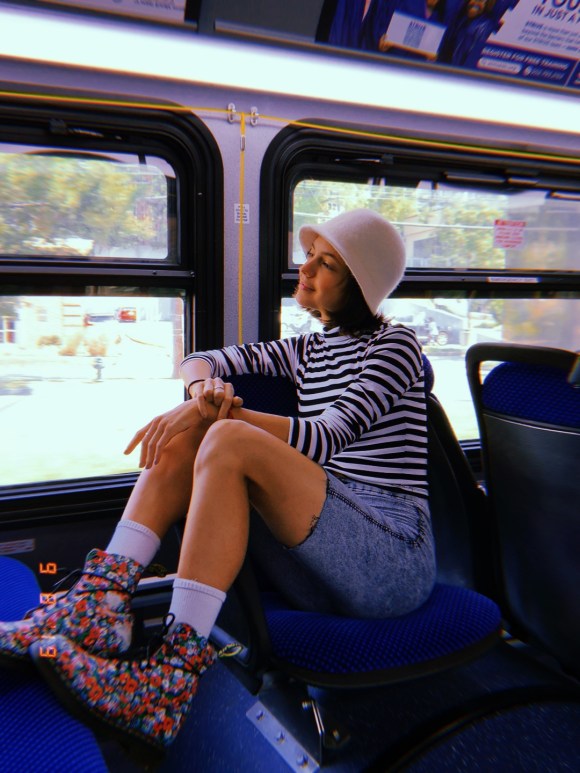
Alexa looking impossibly chic on a DC bus.

5. Tell us your funniest story about the dance world.

I really thought I’d struggle thinking of something, but one thing came to mind almost immediately…It was during my second Nutcracker with The Washington Ballet. I remember it was one of the first nights I was dancing Clara, and it was one of my only nights too because I was already performing a few other roles. I was so excited to relive my alter ego as a 20 year old. Anyway, the show began, and it was so much fun. Party scene was flowing nicely, and I felt very engaged with the audience and with the character. I was living my best Christmas fantasy. Then came time for Drosselmeyer to give me the awaited nutcracker…He pulled it out and gave it to me. Immediately, I knew something was not right. The nutcracker felt…loose. I went on to do my solo. Right as I started, literally seconds in, I felt the head pop off from the body. I started dancing quite nervously, thinking “What am I going to do now?” I had two parts of one nutcracker, and Fritz hadn’t even touched him yet. I finished my solo with yes, two parts of a nutcracker. I decided to finally just fling the legs into the guests. I had a head…just a head. Fritz ended up breaking a nutcracker head, and Drosselmeyer fixed a nutcracker head…it was just way too funny.

6. In your time as a dancer, what’s the craziest thing that has ever happened to you?

Probably has to be the time during a competition in Jackson, Mississippi when Julie Kent walked in to teach a class, and there were literal paparazzi taking pictures of her. Later on in the class she gave me a correction, and everyone filmed it. People then came up to me afterwards and were asking, “Have you ever hugged Julie? What is she like? Is she really that perfect in real life?” And my response was…heck yea. 

7. What would you say to someone who is hesitant to go see a ballet performance?

I know it may be intimidating to go…thinking about it definitely is, but you won’t regret it. It is so much more than just going to a ballet performance; it is a short peek at another world through a carefully constructed glass. It may even touch you, or it may simply make you feel something. We work so hard to put anything onstage that I am sure you will see that hard work, BUT it will be deep behind a fantasy world. Dance is a way to express and to communicate without a single word, and I think that is reason enough to go. 

8. If you had only one sentence to convince someone of the importance of the arts, what would you say?

Without art there is no inspiration, and without inspiration there is no growth. 

9. If ballet had a slogan, what would it be? Or if you had a slogan, what would it be?

Ballet: Immense difficulty made to look easy. 

Alexa: Small but mighty HAHA

Responses edited by Adelaide Clauss

Categories
Dance

Cameron Thomas: An Interview

Cameron Thomas, from Rochester, NY, is a professional dancer with Kansas City Ballet. He started his ballet training at Rochester City Ballet before moving to NYC by himself at the age of 17 to further his training at American Ballet Theatre’s Jacqueline Kennedy Onassis School. Cameron’s artistic prowess is not limited solely to dance, however; he is also a talented pianist and accompanist!

1. To get off to an unconventional start, please write a haiku that describes what dancing feels like to you.

When I can not speak
I will try to understand
Now I am alive

2. How did you get into dancing? How did you become a professional dancer? 

I started dancing when I was eleven years old in my hometown of Rochester, NY. After trying many different sports and being pretty bad at all of them, I followed my sister into gymnastics. Before long, I found the mandatory ballet class we took once a week to be the highlight for me. I was and am still profoundly lucky to have supportive parents of me in whatever I do. They recognized my excitement, and I found my way into the Rochester City Ballet’s production of The Nutcracker that year. As is the case for so many young dancers, I fell hard for the stage. It was the spark for me. I looked up to the professionals in the company, and I worked well with patient, experienced teachers. I continued my training there until, on a whim, I auditioned for American Ballet Theatre’s JKO School, where Franco De Vita allowed me to train. That was when my mind was made up, and I wholeheartedly threw myself into dance. After a lengthy audition season in spring 2015, I found my first opportunity in the professional world at Kansas City Ballet. In the fall, I will be returning for a fifth season there!

3. Did dancing help you through anything difficult in your life? 

I could make a case for dance helping me through everything in my life. Nothing specific comes to mind, but dance has taught me how to truly push myself to be better. It lends a focus and structure that grounds me. As is the case with any serious discipline, there is a ritualism to the pursuit of improvement that helps me stay motivated in every aspect of my life. As I have gotten older and begun working on repertoire that is more physically and emotionally involved, I find that dance constantly challenges what I am capable of doing and who I am capable of being. This lifestyle demands creative thinking and hard work. These qualities help me in everything that I do, and I certainly hope I am better for it.

4. What adversities have you had to overcome to continue pursuing your profession? 

To be honest, I have had a relatively lucky experience with dance throughout my life. I had supportive parents, good teachers, and plenty of opportunity. I would argue my path to being a professional was serendipitous. I do work extremely hard and have faced my share of rejection, but I don’t think I would be comfortable claiming that I have overcome major adversity in comparison to many of my fellow artists working today. If anything at all, I would say I am not the most physically gifted dancer. I have had to find ways to adjust my technique to work within those boundaries, and that has made me more thoughtful about how I approach movement. We all work with what we have!

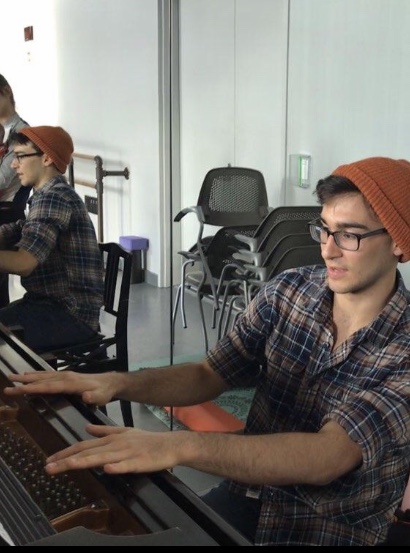
Cameron’s artistic skills extend beyond the realm of dancing into music! Pictured here at the piano.

5. Tell us your funniest story about the dance world. 

I don’t know if it’s particularly funny, but I have definitely been laughed at for it plenty of times… I was playing Drosselmeier for the first time in Kansas City Ballet’s The Nutcracker. Like in most Nutcracker productions, it is a character role with lots of detail and a terrifying amount of interaction with finicky props onstage. I had one dress rehearsal to prepare for my first show, which was a student matinee. I knew the role, but the prop gods were not with me. Our nutcracker prop in the party scene has a detachable head, so Fritz can break the toy at the end of the party. As I revealed the nutcracker to the audience, I was way too excited and flung him forward, popping his head off. It rolled right down center at full speed, covered half the stage, and rolled into the pit. If I were bowling, it would have been a strike. I hope I covered my mistake well (I really didn’t at all), but the only thing I remember is loud laughs and jeers coming from the young kids in the audience and louder laughs and choice words from the dancers onstage. At least Clara still seemed pretty happy with her headless nutcracker.

6. What would you say to someone who is hesitant to go see a ballet performance? 

This is a difficult question to answer. What I think is most important for an audience member to understand is that dance is an active medium of art. In order to fully appreciate most great choreography, it is usually necessary to invest some amount of time and energy looking into why the work is beautiful. Context makes an absolute world of difference. A classic might shine in its purity and technical precision, while new choreography might seek to creatively challenge the form. Some works flaunt the dancers’ athleticism, others highlight their delicacy, others still display their ability to connect with an audience emotionally. To appreciate a work for what it does best, I would say be ready to engage with the work and with the performers- to watch and listen actively, think critically and inquisitively, be observant, try to make connections, and be prepared with some background knowledge of the circumstances under which the piece was created. Not every work is for everyone, but if each performance is judged in the context of what it is trying to be or what it wants to say, then I think there is so much to love about the vast majority of dance being performed around the world for every audience member. Basically, if you do nothing else, please read the program. It will help a lot.

7. If you had only one sentence to convince someone of the importance of the arts, what would you say? 

That’s a big responsibility so I might just throw it to Oscar Wilde:

“It is through art, and only through art, that we realise our perfection”

8. If ballet had a slogan, what would it be? Or if you had a slogan, what would it be? 

A good friend of mine says that he tries to simply, “Show up every day and get better.” I strive to dance that way, and I hope I am able to live that way.

Edited by Adelaide Clauss

Categories
Dance

Stephanie Sorota: An Interview

Stephanie Sorota, from Glen Rock, New Jersey, is a professional dancer with The Washington Ballet. She received the majority of her training from Petrov Ballet School in Waldwick, New Jersey. After graduating from high school (as the salutatorian, no less), she moved to DC to join The Washington Ballet as an apprentice. In her limited spare time, Stephanie manages to take college courses and is also a talented visual artist, creating beautiful ballet-themed drawings.

1.To get off to an unconventional start, please write a haiku that describes what dancing feels like to you.

Two steps forward and
One step back the eternal
Dance of progression

2. How did you get into dancing? How did you become a professional dancer?

My mom had danced her whole life, so when I was probably around three, she enrolled me in dance classes. At that point, my mom still took ballet classes once or twice a week, and my dad would sometimes bring me to watch her. There was one small door you could use to see into the classroom, and I was definitely too young and too obnoxious as a child to actually watch. What I do remember is dancing around in the lobby to the music that was being used while my mom was taking class. When I was old enough, I told her, “I want to go to a real ballet school, like you.” I was very serious about doing well in my dance training because I have always loved dancing, but until I was about eleven, I never considered it as a career. (The career path I wanted for a long time was to become a veterinarian actually.) I started taking class once or twice a week with Johanna Butow (a former dancer of American Ballet Theatre), and she was the first person I recall truly learning the intricacies of ballet technique from. There was so much to do, so many things to work on! For the first time I remember thinking, “I could spend the rest of my life doing this.” That transformed into knowing that I wanted and needed to dance professionally. I was fortunate to train in a studio with wonderful teachers and be mentored by the owner of the studio, Eugene Petrov. I was also lucky to be surrounded by talented, hardworking, and passionate dancer friends. I got my position with The Washington Ballet through one of many, many cattle-call auditions I went on during my senior year in high school. Afterwards, I was asked to go down to Washington, DC to take company class and was offered an apprenticeship with The Washington Ballet. I’ve been dancing happily with TWB ever since.

3. Did dancing help you through anything difficult in your life?

I had some personal family issues growing up, right around the time I decided I wanted to train with the goal of becoming a professional dancer. Dance gave me something during that time that I will always be grateful for. It was a passion and a focus. It was also a quiet place I could go to and think of nothing more than how to make each step better. It kept me mentally strong, and it gave me a purpose beyond myself.  

4. What obstacles have you had to overcome to continue pursuing your profession?

When I was younger, I was diagnosed with scoliosis and had to be braced for it from age eleven to age thirteen. It caused many issues with my strength and alignment, as a student and on into my professional career. As a professional dancer, I began working with the lovely Suzanne Koucheravy, who has been helping me through scoliopilates learn how to best align my “curves” as I dance. Presently, I am struggling to work through an overuse injury, which has been plaguing me for several months. This injury (fortunately I suppose) has been my first prolonged injury, and it was challenging for me to dance every day knowing firstly, that I would be in pain and secondly, that I could be making the injury worse every day I continued to dance. The recovery process has also been maddeningly slow, but I am beyond grateful for the guidance and support from TWB’s physical therapist, Megan Poll, and for this weird pause in my normal life to have the time to recover slowly. 

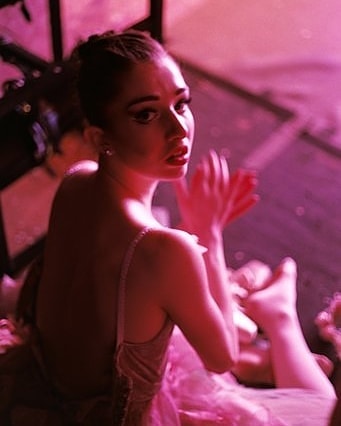
Stephanie backstage in the wings
Image: Olivia Lipnick

5. Tell us your funniest story about the dance world.

In The Washington Ballet’s Nutcracker, the Spanish dance has a partnered saut de basque manège* at the end. It kind of feels like what I would imagine being in a blender is like, honestly. Anyway, the costume is a layered, high to low, ruffle skirt, which can be pretty long on some of the shorter dancers (me). I do not know how in the world this happened, but on the last partnered jump of the manège, I landed with both of my feet caught inside of the skirt. I was completely tangled, but in my mind, I knew I had 0.2 seconds to run around my partner before the next and final step of the dance. Somehow, I managed to untangle myself. The funniest part? No one noticed!

*editor’s note: Towards the end of the Spanish dance in The Washington Ballet’s Nutcracker, all six dancers move around the floor in a circle with the women performing a series of partnered jumps.

6. What would you say to someone who is hesitant to go see a ballet performance?

Ballet will speak to the humanity in you, whether you enjoy it or not. And if you don’t enjoy it? It’s art! When was the last time you enjoyed every piece of music you listened to? Or every book you’ve read? Go again, watch more. You will find a piece that you enjoy, and it will speak to you. You don’t need to be a balletomane or a dance historian to understand the emotional purpose behind a piece of dance, you just need to be human. 

7. If you had only one sentence to convince someone of the importance of the arts, what would you say?

What is the world without the expression of beauty, pain, nature, and humanity?

8. If ballet had a slogan, what would it be? Or if you had a slogan, what would it be?

“You win some you lose some” would be ballet’s slogan. Sometimes, as a dancer, you finish your rehearsal day, class, or performance feeling absolutely great. Other times you know in your heart of hearts that you can do better than the work you just did. “You can learn something from this” is my personal motto for these feelings, because as long as I can learn from whatever the day brought me (dancing or otherwise) I’ve accomplished something. And being on a constant journey of discovery is one of my absolute favorite things about being a dancer. 

Responses edited by Adelaide Clauss
Categories
Dance

Courtney Shealy: An Interview

At age 17, Courtney Shealy moved by herself from her home state of Florida to New York City to join the studio company of American Ballet Theatre. Since then, Courtney has progressed steadily upwards to her current position as a member of American Ballet Theatre’s corps de ballet. Besides being a ballet dancer, Courtney is also a multifaceted artist who enjoys singing and playing music, serving as a muse for dance photographers, and taking the occasional hip-hop class!

1.To get off to an unconventional start, please write a haiku about anything that comes to mind at the moment.

Dancers are crazy,
Push our bodies past limits,
Yet we still love it.    

2. How did you get into dancing?

My grandma saw that I loved to perform in living rooms, in restaurants, and pretty much anywhere I could get the attention. I was about 5 when she enrolled me in a musical theater class. The teacher of that class told her I had a lot of potential and that I should audition for Northwest Florida Ballet Academie. After a couple of years, I auditioned when I was in third grade. I received my acceptance right after the audition and joined the next day. When I was 16, I had my sights set on going to Pittsburgh Ballet Theatre’s high school program for my senior year of high school. My teacher at the time, though, told me that there was an audition for American Ballet Theatre’s summer intensive and studio company in New York City and that I should go. I went to the audition, and they invited me to come back for a week to take classes with the studio company. So, I went back in April for a week, and I got the email two weeks later that I was accepted!

3. Did dancing help you through anything difficult in your life?

Dancing has always been my escape. It’s my free therapy! It especially helped when I was growing up and dealing with a custody battle between my parents. My mother and father separated after I was born. Between the ages of 5-12, I clung to dance whenever I could. It was the only stable thing in my life for years. My father has always been my rock and best friend and has always encouraged my passion for dance. To this day I use dance as therapy, expression, and as a tool to get through hard and stressful times.

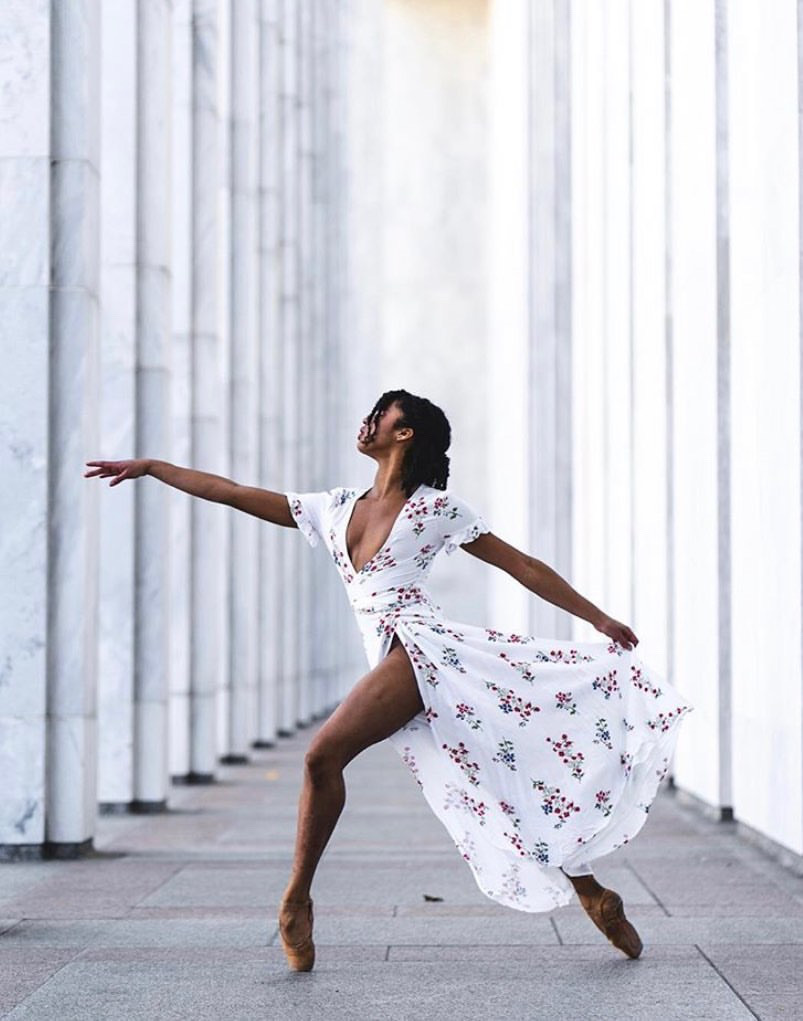
Image: James Jin

4. In your time as a dancer, what’s the craziest thing that has happened to you?

The craziest thing that happened to me was when my company was on tour in Detroit, and we were performing Romeo and Juliet. I was supposed to be done after being a town lady in Act I. After finishing the part, I went all the way back to our dressing room, which was practically a mile away from the stage. I obviously started changing and was taking my character shoes off. All of a sudden over the intercom, I heard our stage manager saying, “Courtney Shealy, come to stage immediately. You’re doing ballroom scene!” This was the scene right after the town ladies’ scene and was a quick change. May I remind you, at this point I was completely undressed and started freaking out. I put on briefs, grabbed my character shoes, and raced through the theater with a towel wrapped around me. This dressing room had never felt farther!!! In my sprint, I literally ran by EVERYONE! Crew, dancers, security guards, you name it!!!! I got backstage only to find that a fellow dancer had jumped in the spot and was already onstage. I went to our stage managers, and they said they had made a mistake and that it wasn’t my fault. After that incident, I always wait a little longer before getting completely undressed during a show!

5. What would you say to someone who is hesitant to go see a ballet performance?

If you want to escape from reality and see some pretty strong people showing you their soul onstage….. come!!!!!

6. If ballet had a slogan, what would it be?

If you don’t love it, it’s not worth it.

Responses edited by Adelaide Clauss
Categories
Dance

Katherine Barkman: An Interview

Katherine Barkman, from Bucks’ County, Pennsylvania, is a professional dancer with The Washington Ballet. Prior to joining The Washington Ballet, she was a principal dancer with Ballet Manila. In 2018, she competed in two prestigious competitions (the Jackson IBC and the Varna IBC) and was awarded the silver medal at both. Katherine also teaches at The Washington School of Ballet, passing on the knowledge and experience she has acquired to the next generation of dancers in training.

1.To get off to an unconventional start, please write a haiku that describes what dancing feels like to you.

To dance is to speak
beyond words my heart can sing
through movement I grow

2. How did you get into dancing?

I always knew I wanted to be a ballerina. It was an intrinsic calling to move. At age 2, I begged my parents for ballet lessons. I danced my whole childhood, putting on shows in the living room every night for my family. My professional training didn’t start until I was 14 years old and met my coach, Nadia Pavlenko. It was quite late to start learning proper technique, and I had to do a lot of catching up. My daily schedule was a private lesson with Nadia from 11am-5pm, after which I would go home and do high school online. At 18, I received the opportunity to become a principal dancer at Ballet Manila in the Philippines. I made the life-changing decision to move to Manila and chase my dream. 

3. Did dancing help you through anything difficult in your life?

Dancing is always my safe haven. This art form is constantly teaching me and transforming me into a better version of myself. The most difficult time for me was leaving home and moving to the Philippines. I was often very lonely there, but ballet became a home in and of itself. It doesn’t matter where I am or what is happening around me. It is the inner sanctuary ballet has inspired me to create within where I find my freedom. 

4. What adversities have you had to overcome to continue pursuing your profession?

There is always challenge in this profession. Challenge is the key ingredient for growth. A lot of the challenges I have had to overcome were internal. Old patterns of negative thinking that would hold me back. Self-doubt. Fear of failure. Perfectionism. Needing validation from others. Body image issues. Wanting to be liked and accepted by everyone. These were all major internal battles I had to face in order to pursue my dreams. I still face challenges constantly; the difference now is that challenge doesn’t scare me. It excites me, because I recognize I can only grow stronger and bolder by facing it head on. 

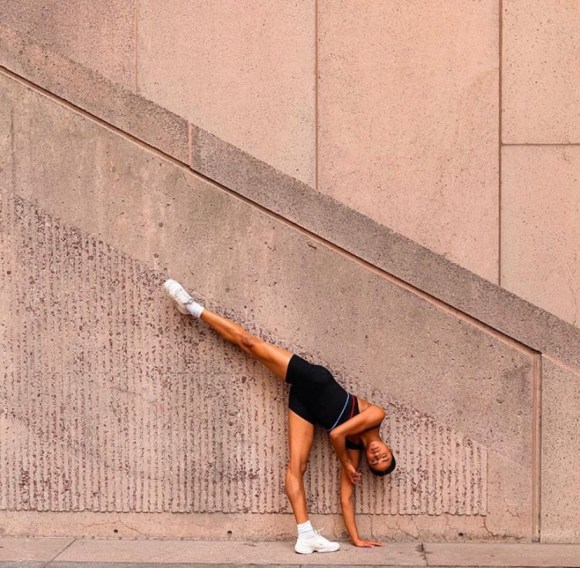
Image: Brittany Stone (Instagram: @itsbrittanypics)

5. Tell us your funniest story about the dance world.

I think one of the funniest moments was during my debut as Kitri in Don Quixote. We had a big dress rehearsal the day before the performance. I was only 19 at the time and super nervous. It was the final entrance of the coda in Act III, and I ran onto the stage for the diagonal of piqué turns. As I ran on my legs were so tired that I totally wiped out and slid almost to the center of the stage. I laughed about it and was glad it only happened during the dress rehearsal… until it happened again the next day during the actual performance!! 

6. In your time as a dancer, what’s the craziest thing you’ve ever had to do?

I competed at the 2018 Varna IBC. The historic stage in Varna is in a beautiful outdoor theatre! It was Round 2 of the competition, and my performance got delayed due to rain. It was so delayed that I didn’t compete until 4am!!! I had never been so exhausted in my life! But it really made me fearless that I could perform Le Corsaire at such an unruly hour and in the rain! 

7. What would you say to someone who is hesitant to go see a ballet performance?

Going to see a ballet is not always about the ballet. It is about the experience of witnessing something so fleeting. When you watch ballet you are experiencing an artistic expression that can never be repeated the same way again. You are watching a miracle onstage. 

8. If you had only one sentence to convince someone of the importance of the arts, what would you say?

It is through art we are reminded that even in our humanity we have the ability to create beauty; we are the spark of something Divine. 

9. If ballet had a slogan, what would it be? Or if you had a slogan, what would it be?

For both: Grow in grace. 

Edited by Adelaide Clauss
Categories
Dance

Remy Young: An Interview

Remy Young, from Belmont, North Carolina, is a professional dancer with American Ballet Theatre. At 16 years old, she moved by herself to New York City to train at American Ballet Theatre’s Jacqueline Kennedy Onassis School. After training at the school for a year and a half, she joined the ABT studio company and from there ascended into the ranks of the main company.

1.To get off to an unconventional start, please write a haiku about anything that comes to mind at the moment. 

The world is weird, right
So it may feel For now
We live like we're free

2. How did you get into dancing?

My grandma has her own ballet school in Charlotte, NC and I basically grew up there. She typically accepts students starting at age 3, but when I was 2.5, I would go through the lost and found, dress up in old ballet clothes, and sneak into class anyway! They allowed me to try as long as I wasn’t disruptive. Been dancing ever since!

3. Did dancing help you through anything difficult in your life?

Right now! This pandemic has been one of the most difficult times of many artists’ lives. While I’ve always acknowledged the absolute necessity of the arts, particularly ballet, I’m currently experiencing a need to dance on a much deeper level. I dance to share storiesto transcend an audience and connect with them on a deeply emotional level. Beauty is powerful… it inspires, it comforts. What’s more, it is much easier for me to express myself onstage through movement than any other medium in any other environment. However right now, being stripped of a stage, an audience, and a company, dancing remains a necessity; this time as a form of therapy. It’s a release, it’s meditation. Dancing serves as a way to vent without knowing what to say. I can honestly say I do not know how I would be holding up right now if it weren’t for dancing.

Remy looking fabulous on the streets of New York

4. In your time as a dancer, what’s the craziest thing that has ever happened to you?

Ok…the craziest thing that has ever happened to me was definitely when my shoulder dislocated onstage during a performance of the Nutcracker. I was coming on for an entrance in the snow scene in Act 1 with this huge balancé en tournant that was supposed to travel almost halfway across the stage. I was really feeling myself and approached the step with a lot of passion…and BAM, my left arm pops out. I continued to do the next two steps holding my arm with my other hand, but then I had no choice but to run off. I came off stage freaking out. The next thing I know, I’m about to pass out into my director’s arms, while my ballet mistress is taking off my pointe shoes. Our physical therapist was by my side, trying to figure out how to reset my shoulder. The way it had dislocated, however, meant that only a doctor could reset it at a hospital. About 30 minutes later, I was in an ambulance with one of my ballet mistresses, still with a full face of stage makeup on. We got to the hospital where the doctor used straps to relocate my shoulder. Needless to say, I wasn’t able to do Act II that night!

5. If you had only one sentence to convince someone of the importance of the arts, what would you say?

I would use this quote from Dostoevsky’s The Idiot: “Beauty will save the world.”

6. If ballet had a slogan, what would it be?

Ballet is the full package- athleticism, entertainment, and art all in one!

Edited by Adelaide Clauss