Categories
Dance

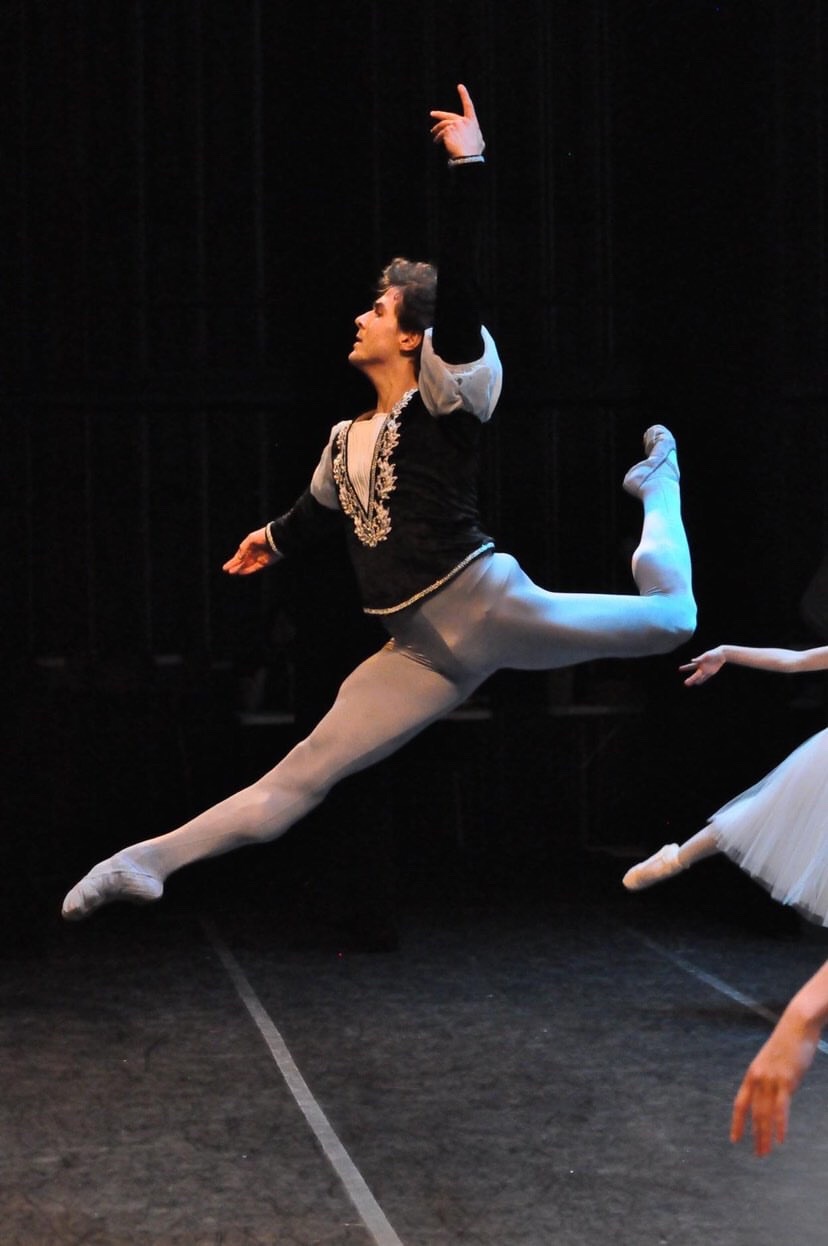
Alex Pappajohn: An Interview

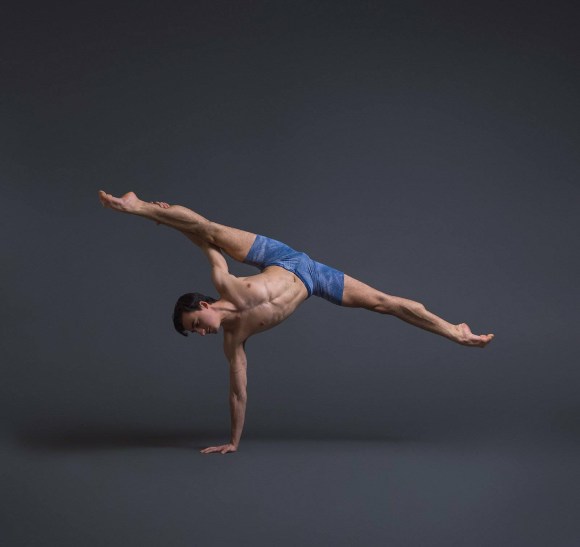
Alexandros Pappajohn (“Alex”) is a professional dancer with The Washington Ballet. Prior to this, he danced in American Ballet Theatre’s studio company after training at the School of American Ballet and Ballet Academy East in NYC. In his limited free time, he takes college courses at Georgetown University and loves to go surfing whenever he gets the chance.

1. To get off to an unconventional start, please write a haiku that describes what dancing feels like to you.

Flying through the air
Immersed in a character
A different world

2. How did you get into dancing?

I was exposed to ballet at a very early age through my mom, who was a professional ballet dancer. Through a combination of looking at pictures of her dancing that were put up around the house and being around discussions about ballet that she had with her friends, who were also former dancers, I developed a sense of how demanding ballet dancing was and developed a deep-respect for ballet dancers from a very young age. However, despite my unique exposure to ballet, I was not interested in actually trying it out until I was ten or eleven years old. At the end of elementary school, I began to lose interest in tennis and football, the two sports that dominated my early athletic experiences. In my search for a new activity that I might enjoy, and with my understanding of the athletic challenges of ballet, I decided to try it.

3. Did dancing help you through anything difficult in your life?

Throughout most of my childhood and adolescence, I had very little confidence in myself and let my own self-doubt permeate almost every aspect of my life. Consequently, I avoided working hard for something or “trying” as I didn’t want to experience the seemingly inevitable outcome: defeat or failure. Ballet, with the structure and direction it provided for me, in combination with a few of my ballet teachers who gave me both encouragement and held me to a standard to which I would have never held myself, helped me overcome this insecurity. I loved being in ballet class, yet didn’t have the confidence to take my own talent seriously. In continually holding me to high standards, and showing me their unwavering optimism about my abilities, my teachers gave me a really healthy space in which I wasn’t afraid to push myself in something I really enjoyed. I gained both the confidence in myself that I needed to explore so many other avenues in my life as well as the ability to see past self-doubt and trust the process of hard-work.

4. Tell us your funniest story about the dance world.

A few years ago, I went to a competition in Florida. While most competitors went to the competition with their coaches, who followed them and helped them through all of the activities during the competition, I went with my father. Therefore, I got really confused when other competitors started telling me that they had met my “coach,” and thought he was very cool…especially, when they started telling me about the conversations they had with him about all of the variations, activities of the competition, and just ballet-specific stuff in general. One competitor even told me that he was talking to the other coaches about his opinions on technique and style…Everyone seemed to think my father was a legitimate coach who had a real ballet career. For the record, my father has never put on a pair of tights in his life. He has never been a professional ballet dancer, and the only experiences he has had with ballet have been through watching me dance and hearing about it at the dinner table.

Alex cutting an impressive figure as he skillfully maneuvers the waves! His affinity for surfing is legendary at The Washington Ballet!

5. What would you say to someone who is hesitant to go see a ballet performance?

Ballet is so unique because it requires both athletic and artistic ability. When you go to see a ballet, you are seeing athletic artists. You are seeing people that have devoted their lives to understanding, pushing, and exploring their bodies for a kind of expression that no other artist or sports player has achieved. There is nothing like it.

6. If you had only one sentence to convince someone of the importance of the arts, what would you say?

The Statue of Liberty, a piece of art, is perhaps the most important symbol of freedom and democracy in the world.

7. If you had a slogan, what would it be?

A quote by Friedrich Nietzsche: “He who has a why to live can bear almost any how.”

Edited by Adelaide Clauss
Categories
Dance

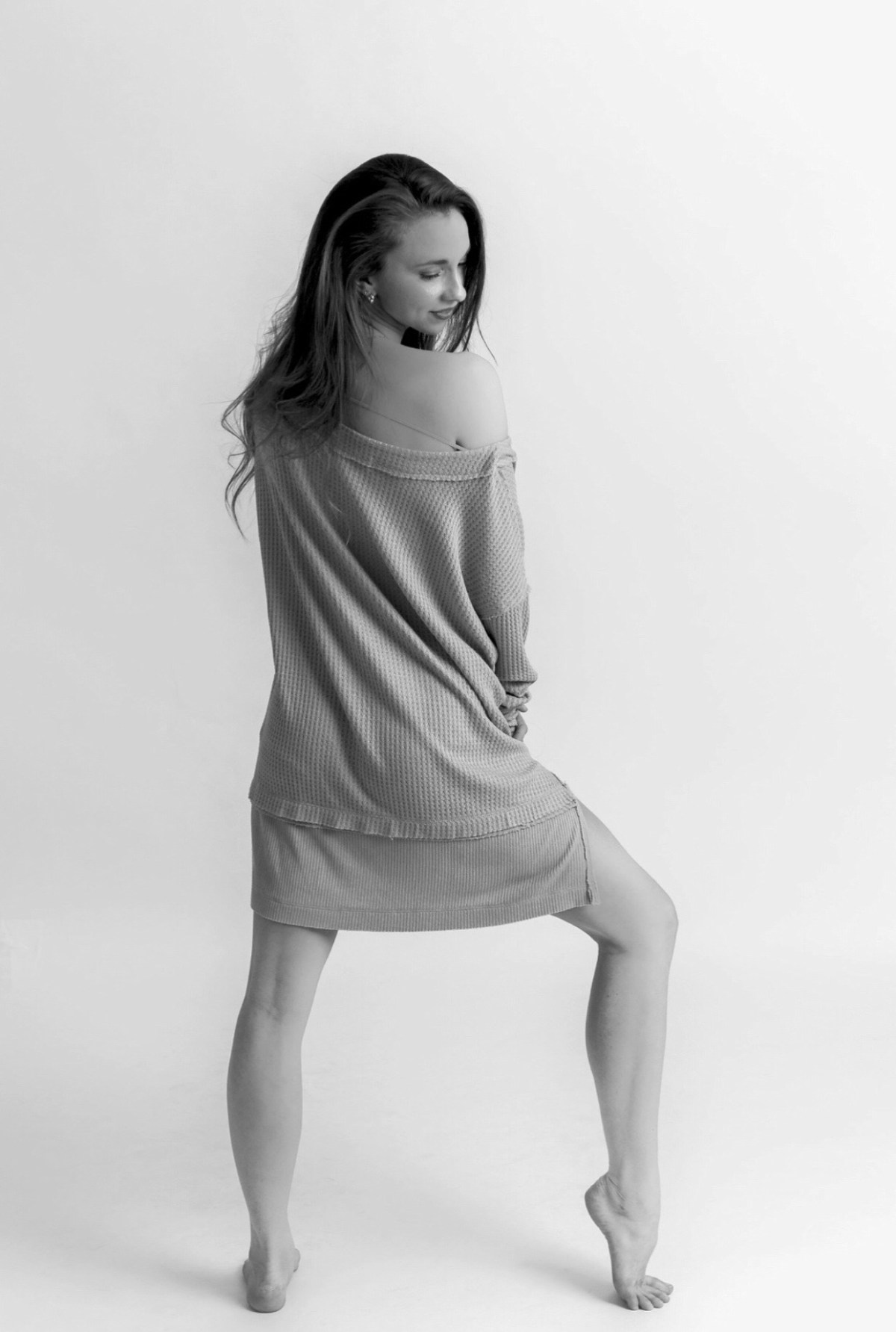
Jessy Dick: An Interview

Jessica Dick (“Jessy”), from Muskegon, Michigan, is a professional dancer with The Washington Ballet. She holds a BFA in Dance Performance with a minor in Strategic Communications from Butler University. Jessy also is a wonderful ballet teacher, teaching private lessons as well as adult classes, and puts her minor in communications to good use by working for Zarely, a ballet and fitness clothing company.

1. To get off to an unconventional start, please write a haiku that describes what dancing feels like to you.

Mind body and soul
Balance and pure harmony 
Truest form of self

2. How did you get into dancing?

Growing up, I was surrounded by the arts. My mom was a professional ballet dancer, and my dad was a high school English/Theater teacher with a deep love and appreciation for music and the arts. I trained at Grand Rapids Ballet Company until high school, when I transitioned into training locally from my very own mom. It was tough at times having your mom as a teacher, but I am forever grateful for her training and guidance. I would not be the dancer I am today without her and am so lucky that she didn’t force a professional dance career on me. She allowed me to make the decision to dance professionally on my own. In doing so, I have a bond with dance that feels as if it could never be severed; although it took me a longer time than most to commit to the idea of professional life, from then on I have been more committed and appreciative of the art form. I always knew dance would be part of my life in one way or another, but I also knew that going to college and getting a degree was important to me and something I wanted for my own personal growth and evolution.  At that time, there were not a lot of professional dancers choosing the path to go to college…I took a chance and feel lucky everyday that I was able to both go to college and have a job as a professional dancer afterwards. Although the transition from college to professional life was very challenging, it has been such a rewarding process every day to reaffirm my love for this life I get to live. I have gained life experience and maturity from my time in college that will serve me in all areas of my profession. Life is about learning and growing, and dance mirrors that beautifully. Dance opens you to a world of creative expression that has no end or limit.

3. As a professional dancer who attended a full-time college program, what were some of the specific benefits and challenges that came from choosing the college route?

Going to college allowed me the space and time to start becoming a whole person. I met the love of my life and got to grow and evolve with him through some of the most transformative years of our lives. My roommate now is one of my best friends from college who ended up going to grad school at GW and is working now as an Art Therapist. College allowed me to meet people that had very different dreams than me, broadening my view of what life can offer. The most important piece of me that was able to grow was my emotional maturity and confidence in life. I see myself as a multifaceted person who has strengths and interests outside of the studio/stage, so when the performing aspect of my career is over I have options.

College gives you skills that can translate into any situation, but that doesn’t mean that it can prepare you physically the same way being in a professional training program/school can. Although we got a lot of performing opportunities, it is not the same as being part of multiple professional productions where, regardless of your role, you are continuously gaining a level of familiarity and overall comfort being on stage. When I went to The Washington Ballet, I saw how much dance was a passion for every single person there. At first, it was intimidating to see such beauty and talent, but I quickly switched my mindset to soaking up every ounce of knowledge I could. Instead of beating myself up about being older than the other dancers in my same position, I used it as strength. Knowing my emotional and mental maturity was strengthened through my experiences during college, I now see every physical obstacle as a way to grow into the dancer I want to be.

4. Did dancing help you through anything difficult in your life?

Dance helps me in more ways than one. I am realizing that more and more as the days go on. I find it keeps my mind calm and body healthy. The anxiety around the world can put a lot of stress on your body. Especially living through this difficult weird time, I find dance to be my saving grace. The thing about ballet in particular is that it involves so much of your mind and body working together. You have a million little muscles to be tuned into. You have to totally be present in the movement and moment. This is the gift ballet gives. The gift of escaping the every day stresses and connecting you to your purest form of self in any given moment.

A snapshot of love: Jessy and her boyfriend, Liam

5. What adversities have you had to overcome to continue pursuing your profession?

Dance is one of the most challenging art forms, because you have to be so in tune with yourself. I am constantly working on balance of my mind and body. This art form can be very difficult, not only physically but mentally. The biggest challenge that I have faced and continue to face is trusting myself. We have to put total trust in our bodies that our work every day in the studio will translate to the stage as strength and power. In order to be free on stage, to be your most expressive and purest self, you have to be able to let go of any thoughts of “I’m not good enough” or “I don’t think I can do this” or “I’m not strong enough”… and so on. Every dancer faces difficulties, and I believe once you are able to fully trust in the power within yourself, that’s when you shine the brightest. You look at some of the greatest ballerinas and watching them you never feel like they won’t be able to do something, because they emanate such strength, beauty and grace that comes with confidence and trust of their bodies. I am constantly working to find compassion for my body and am learning to appreciate every part of it, even if I see weakness. Dance for me has become a way to learn more about myself, and through that process of self-evaluation and reflection, I feel a deeper connection to myself and my body than I ever have. With more experience comes more understanding, and that is what I am realizing most. I am taking each day to learn and fine-tune my body, so that I can be one step closer to trusting myself in whatever situation I am faced with.

6. Tell us your funniest story about the dance world.

Dancer fails are pretty funny. Here is one from Nutcracker Snow Scene. I had two different spots to learn, each with different entrances, spacing, and choreography, so it was hard to keep track sometimes. There was one instance where I had to do a different spot in each of the two shows on that day, so I got a little mixed up… long story short I went upstage instead of downstage and fully body slammed my fellow snowflake. For a split second, we were in a very awkward hug, staring at each other with eyes wide in panic before continuing on and trying to act like nothing had happened. Good news: I never messed up that entrance again for the remainder of the run.

7. What would you say to someone who is hesitant to go see a ballet performance?

Just do it…what do you have to lose? If nothing else, you get to say you’ve experienced a live ballet performance. On the other hand, you have the potential to connect with an artistic, creative side of yourself that might not be exposed during your regular day. You get to disconnect from your problems or worries of the day and be present.

8. If you had only one sentence to convince someone of the importance of the arts, what would you say?

Life is about growth, pushing your boundaries, finding love, joy and passion, which wouldn’t be possible without the arts.

9. If you had a slogan what would it be?

Your body is smarter than you think.

Responses edited by Adelaide Clauss

Categories
Dance

Carlos Gonzalez: An Interview

Carlos Gonzalez, from Madrid, Spain, is a professional dancer with American Ballet Theatre. When he was just 19 years old, he moved by himself to NYC to become a member of American Ballet Theatre’s Studio Company. He received his early dance training from The Fortea Conservatory of Madrid and later attended The Royal Conservatory of Dance Mariemma in Madrid.


1. To get off to an unconventional start, please write a haiku that describes what dancing feels like to you.

Dancing is a drug
You can never get enough
A rush of pure joy

2. How did you get into dancing?

I started dancing when I was 6 years old, simply because I had no interest in playing soccer like the rest of the boys normally do at that age. A group of my friends from school suggested that we sign up for dance classes as an after-school activity two days a week. For three years, we danced sevillanas, jotas and other traditional Spanish dances. When I was 9 years old and had never done ballet before, my mother, who thought I had rhythm and was decent at dance, decided to sign me up to audition for a professional dance conservatory in Madrid. At first I was angry at her, because she didn’t say anything to me about it. Now I thank her every day, because there has been no day since then that I’ve regretted doing that audition or choosing this profession.

3. Did dancing help you through anything difficult in your life?

Dancing has helped me in many moments during my life, but I think there are two moments that I remember the most. The first one was in my last year of high school, when I had exams practically every week. I slept less than six hours a day and had to dance from 9am to 3pm Monday to Saturday, all while going to high school from 4pm to 9:30pm Monday through Friday. Those six hours of dancing every day made all that effort and work that year worthwhile. And of course, the year I moved to New York and joined the ABT Studio Company was very hard for me…I didn’t speak English perfectly, I didn’t know anyone, and my family and friends were 6,000 km away. I only had ballet, which I focused on 24 hours a day. That helped me get through that year, during which I missed Madrid incredibly. Ballet made the sacrifice of starting a completely new life less difficult. That year I learned the most about myself and the things I previously didn’t think I was capable of.

4. What adversities have you had to overcome to continue pursuing your profession?

I think that most of the obstacles that male dancers have to overcome throughout their lives are quite common, especially when it comes to bullying and being called all sorts of things. For me, being from a country where soccer dominates all sports and aspects of society, it was quite hard not having any interest in wanting to learn the sport. When I started dancing at 6 and then continued with ballet at 9 years old, boys always asked me why I did ballet if ballet is for girls. At first, this irritated me a lot and made me fight with many boys. Over time, I learned to ignore those comments and continue with my passion, regardless of their opinions such as dance not being worth anything, dance not being a career with a good future, or dancers not being able to make any money. I never cared about any of that, because I’ve always known that’s what I wanted to do for the rest of my life (or at least for as long as my body and mind allow me to). And of course, I always had the unconditional support of my family and close friends. Another adversity I faced was the lack of money at home to go see performances or travel to other countries for summer intensives. I had to adapt to what my family could afford for me, even though I have to say they always did their best to give me everything I needed to keep learning and growing as a dancer. And ultimately, I think the feeling of being homesick when I first moved to the U.S. was really challenging for me. However, as I started feeling more comfortable with the language, meeting some awesome people, and creating friendships, I built my new life here and that feeling of missing home went away over the years.

Image: Benjamin Majors

5. Tell us your funniest story about the dance world.

I think the funniest story I have is the time I fell on stage doing consecutive tombé pas de bourrées in the peasant dance at the end of Act I of Giselle. I remember that the music was going very fast, and I tripped over my own feet! As fast as I fell, I bounced off the ground even quicker. It was also the only show that Natalia Osipova came to dance as a guest artist that season, and I felt much more ashamed because I thought I had ruined her performance. Luckily, the stage is full of other dancers doing the same step at the same time, and nobody really noticed it. Actually, I’m happy with the giggles caused by my fall that performance, and since it happens to everyone at some point in their careers, I didn’t make a big deal out of it. I’m also glad I didn’t get hurt.

6. In your time as a dancer, what’s the craziest thing that has ever happened to you?

The craziest thing that’s ever happened to me was on ABT’s tour to Los Angeles in July of 2018. We had three performances of Natalia Makarova’s Bayadère, and I was supposed to dance some corps (ensemble) roles. However, after finishing the spacing of Act I on the day of opening night, one of our ballet masters called me and said they needed me to do the Bronze Idol/Golden Idol* in the dress rehearsal of Act III in two hours. I had a 15 minute rehearsal with another ballet master to go over the choreography; they needed someone to learn the role because some of the other casts were injured, and they asked me just in case the other remaining casts ended up injured, as well. So there I was going crazy- my first opportunity as a corps dancer to demonstrate what I was capable of, with only 15 minutes of preparation. Without thinking about it too much and letting the pressure affect me, I went out and did the variation in the dress rehearsal. You can imagine the result…👎🏼😂 But I did it as best I could given the situation, and even though I didn’t show my best, I am proud that they thought of me for that emergency situation. In the end, I didn’t have to do any of the performances, since two of the other dancers doing the role ended up being able to dance. But, I am very grateful for the opportunity that they gave me to dance that variation on stage.

*editor’s note: the Bronze Idol is a famous soloist (featured) part in La Bayadère

7. What would you say to someone who is hesitant to go see a ballet performance?

I would encourage them to spend at least five minutes watching a ballet video online, while trying to have an open mind and get carried away by the music. People should allow the movement of the dancers to facilitate all kinds of emotions: joy, sadness, melancholy, anger, rage, love or boredom. Because ultimately, ballet exists to make audiences feel something – this is enough of a reason to give it a chance. One would be surprised at how many people who have never seen ballet could enjoy their first five minutes, then ten, then half an hour, then an hour…I hope that these viewers would buy tickets to see live dance someday.

8. If you had to convince someone of the importance of the arts, what would you say?

Who wouldn’t like to be transported to another world where anything is possible, all emotions and feelings are accepted, the present feels even more present, and every thought can be reflected through sounds, movements, or images? That is the power of art. Are you sure you want to miss it?

9. If you had a ballet slogan what would it be?

Consistency is the key to success, so work as hard as you can to become a better dancer than you were yesterday, all while enjoying every second of the present so you can look forward to the artist you will become.

Responses edited by Adelaide Clauss

Categories
Dance

Gilles Delellio: An Interview

Gilles Delellio, from Brussels, Belgium, is a professional dancer with The Washington Ballet. Prior to becoming an apprentice with TWB, he was a part of the trainee program and the studio company of The Washington Ballet. Gilles is also a talented photographer, who uses his skilled eye to take beautiful dance photos; follow him on Instagram @gdelellio.pic

1. To get off to an unconventional start, please write a haiku about anything that comes to mind at the moment. The weirder, funnier, or more random the better!

Dinosaurs are weird
Me, looking out the window
With me and myself

2. How did you get into dancing?

I wanted to do hip-hop, so my mum took me to a dance school. When I went to see the hip-hop classes, I passed by tap dance class, which got me wondering if I could do that as well. My mum told me that if I wanted, we could come back later and look into the tap dancing. Afterwards, we did go to that tap dance class, and I was so thrilled to try it! My mum asked if I wanted to see ballet too, since it was open, but I refused because I thought ballet was only for girls. So, I began with tap dance and hip-hop at the age of 9. I did start wondering what ballet was, and at the age of 10, I started taking ballet for an hour a week. I really began loving it and started doing more hours of ballet per week the following year, while continuing to tap dance on the side for two more years. I was accepted to the Royal Ballet School of Antwerp in Belgium and spent two years there, before going back to a small school in order to compete in some big ballet competitions all around the world. At one of these competitions in Bulgaria, I received a scholarship to be a trainee at The Washington Ballet. As soon as I got the award, I packed up all my stuff and moved to Washington, D.C. After dancing in the trainee program and the studio company at The Washington Ballet, I became an apprentice in the main company.

3. Did dancing help you through anything difficult in your life?

It helped me a lot in difficult times when I had to leave my family to go to America. It was hard, but ballet just made me forget everything that was difficult and get through it. Being alone without your family around isn’t easy but doing what you love makes everything easier.

4. What adversities have you had to overcome to continue pursuing your profession?

Keep pushing. At first, in my academic school, my friends weren’t understanding of the fact that I was doing ballet, and I lost a lot of friends because of it. Now, being in the dance world is much easier, but it’s still hard sometimes because ballet is such a hard discipline. The key to persevering is to keep pushing and to get inspired by the best dancers in the world.

Gilles with his lovely girlfriend Margaux, who is also a dancer!

5. In your time as a dancer, what’s the craziest thing you’ve ever had to do?

The craziest thing that I had to do was go straight to a performance after a 4-hour long flight because the flight got delayed. I was traveling from Brussels to Italy, with a connection in France. We were supposed to take off in the plane around 12 pm, but the flight got delayed to 3 pm; the show was at 7 pm. Luckily, I knew everything that I had to do on stage. All the steps were in my body, and we had already worked on the pas de deux I was dancing before leaving Belgium. My dance partner was also in the plane with me, so we were both trying to focus and be as professional as we could. It was really stressful, but also a very good experience to have to relax and try to focus as much as possible for the performance!

6. What would you say to someone who is hesitant to go see a ballet performance?

To be honest, watching a ballet could help you think differently. It’s really nice to see how people onstage are reacting, acting, and getting emotional. It’s like watching a movie live!

7. If you had a slogan what would it be?

Art is Infinity. It’s my activity.

Responses edited by Adelaide Clauss

Categories
Dance

Samara Rittinger: An Interview

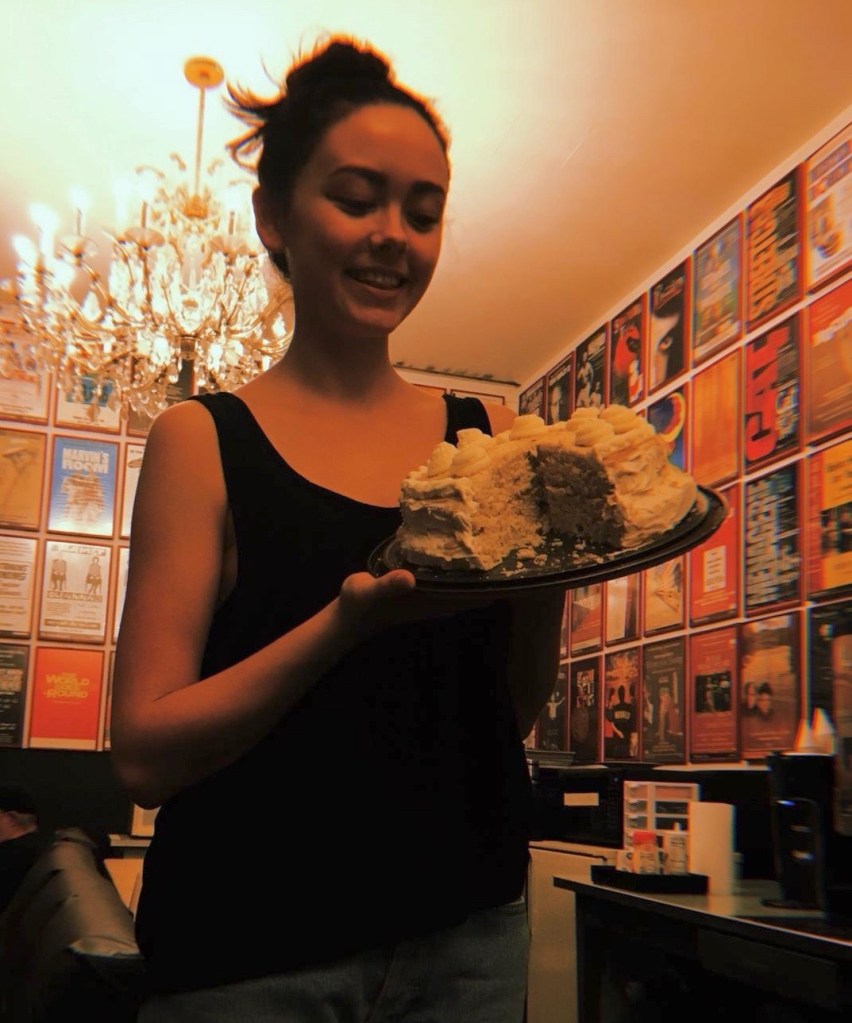
Samara Rittinger (“Sam”), from North Vancouver, Canada, is a professional dancer with The Washington Ballet. Prior to this, she trained at The Royal Winnipeg Ballet School in Canada. She is also an accomplished baker and whips up delicious made-to-order cakes and other goodies in her spare time.

1. To get off to an unconventional start, please write a haiku about anything that comes to mind at the moment. The weirder, funnier, or more random the better!

Cookies make you smile 
All ooey gooey and good 
They won't make you sad 

editor’s note: Washington Ballet dancers are often the lucky recipients of Samara’s baking, and they are among her biggest devotees… Follow Samara on Instagram, @sweets_by__sam

2. How did you get into dancing?

Since as early as I can remember, I’ve been surrounded by ballet; this stemmed from being raised in a family that’s very involved in the arts. My mother was a professional ballet dancer at Canada’s Royal Winnipeg Ballet, and my father was the stage manager for the same company (he also dabbled in tutu making!). I used to watch old performances of my mom over and over until I knew all the steps and danced them around my room. Ever since seeing her in the ballet Big Top, I knew I wanted to be just like her…and I still do.

3. Did dancing help you through anything difficult in your life?

I think one of the biggest things that dancing got me through was the struggle I had with homesickness that lasted for almost two years. I moved away from home to go to ballet school when I was twelve, and even though people warned me that I would miss home, I didn’t think I was going to be affected as much as I was. After all the excitement of starting this new adventure with new friends died down, the realization of starting a whole new life finally sunk in. The only time I wouldn’t be thinking about home and my family was in ballet class. You kind of go into a different state of mind while dancing, and I think every dancer can relate to this. It was that escape to a clear mind that helped me get through it all.  

4. What adversities have you had to overcome to continue pursuing your profession?

I’ve been super lucky to have a very supportive family in all aspects throughout my entire training and professional career. One of the biggest adversities I had to overcome, though, which a lot of dancers face, was self confidence. After joining a professional school, that was the first thing they noticed and told me that I needed to really focus on. The stress I put on myself to change and change fast got to be so much that I started showing the frustration I was feeling in my classes. There were a few times I was asked to leave ballet class to “collect myself” before returning. I was so incredibly lucky to have the teachers I had, who never gave up on me no matter how mad I got with myself in class or rehearsals. After getting so comfortable in the bubble of a ballet boarding school, the thought of auditioning for companies started bringing those self-doubting thoughts back slowly. I think every dancer goes through a version of this, and there is no one way to get past it; there is no timeline for it either. Definitely something I’m still working on! Having self confidence in this profession is such a big part of being a successful dancer.   

Samara at The Kennedy Center with one of her highly coveted cakes! TWB dancers go CRAZY for her sweets, which she frequently brings in during performance runs as special treats for the company Image: Stephen Nakagawa

5. Tell us your funniest story about the dance world.

The first thing I thought of was the party scene in Nutcracker. Since The Washington Ballet does so many shows, each party scene is something completely different and unexpected, and seeing all the things people come up with to keep the magic alive for 30+ shows is hilarious.

6. In your time as a dancer, what’s the craziest thing you’ve ever had to do?

It’s not super crazy, but at my ballet school we had this thing called Concert Hour ballet, where we would tour around Winnipeg in the winter performing in school gyms. As well as performing, we were the ones setting up the lights, the sound, and even rolling out and taping the marley floor. Everyday we would have a call time for 5 am to load up the bus with all the equipment, and then we would set out to the first of two (sometimes three) schools for that day. We wouldn’t get back till late evening, at which point we would unload the bus. Looking back on it now, it was quite intense (especially since it would be negative thirty degrees Celsius most days), but it was also one of the most exciting and rewarding parts of school! It let us feel what it was like to tour.

7. What would you say to someone who is hesitant to go see a ballet performance?

What do you have to lose? If you really don’t like it, there’s the chance to leave at intermission. However, I am 99% positive that if people go to a ballet with an open mind, they will love it. Most people I talk to after they see their first ballet say it changed their whole perspective about the art form in more ways than one. 

8. If you had only one sentence to convince someone of the importance of the arts, what would you say?

If the arts didn’t exist, the world would be a very bland and blank place to live with no creativity and color.  

9. If ballet had a slogan, what would it be?

Lots of pain for a slow but worth it gain 

Responses edited by Adelaide Clauss

Categories
Dance

Sarah Steele: An Interview

Sarah Steele is a professional dancer with The Washington Ballet. Prior to TWB, she trained under Valentina Kozlova and went on to become a member of Tulsa Ballet II; she also attended Harvard for a semester and intends to return there at some point in the future to obtain her degree.

1. To get off to an unconventional start, please write a haiku about anything that comes to mind at the moment.

When the world is dark
Dance distracts, beauty lifts hearts
Help where we can help

2. How did you get into dancing?

Dancing has always been a part of my life, as far as I can remember. My mother did ballet recreationally, and as soon as I found out she was doing it, I was all in. I tried all sorts of styles of dance at first… and stuck with ballet since it was the hardest. Ballet continues to challenge me every single day, and that’s what keeps me in it. 

3. Did dancing help you through anything difficult in your life?

Definitely! I can also almost guarantee that every ballet dancer would tell you the same. For me, ballet has been sort of my invisible best friend. From the time I was 13 with so much teenage angst, to being 17 and dealing with the pressures of high school, and through today—ballet barre has never changed. It’s like coming home, in your body and mind, all at once. It’s not unlike taking out a meditation app on your phone. People do it to take a few minutes to themselves, to regroup, breathe deeply, or focus. There’s an undeniable spirituality about working in a ballet studio— each dancer is on their own mission to improve the connection between body and mind. I don’t mean to get too “out there” about it. But do you know what I mean? It’s really beautiful. 

4. What adversities have you had to overcome to continue pursuing your profession?

I feel very blessed to have had so much support in my life as I pursued professional ballet. There is a huge pre-professional student culture online and off with its own unique pressures and obstacles. Throughout my student life, I never felt alone on my journey to become a professional dancer. My parents are my biggest source of confidence and love, but there are also teachers, dear friends, physical therapists, pilates instructors, and personal trainers who have shaped my career and shaped me as a person. The biggest adversity that I’ve faced is a chronic injury. Chronic injuries are infuriating, because they wear you down emotionally. My best advice for anyone facing chronic pain or injury? Mindset is everything. Once I had done everything I could to physically alleviate the pain,  I was still so angry at my body for not cooperating with me! Even if I had months of zero pain and one random day of mild pain, I would be angry with my body. Once I started being kinder to myself, my pain resolved completely. 

Sarah is also a certified personal trainer and Pilates instructor. Follow her on Instagram, @steelesculpt

5. Tell us your funniest story about the dance world.

Nothing better than a good costume malfunction. During Act II of Giselle, my arm puff slowly slipped down my arm all the way to my wrist, and then flung itself off my arm at the most inopportune moment, landing on upstage centerat the very beginning of the act. It stayed there for the rest of the show, and I was so mortified. Not only was it distracting to the principals’ dancing, but I was the only girl in a very stark line-up of the corps de ballet with a bare arm. More often than not, we’re all laughing at each other at The Washington Ballet. We get really slap-happy sometimes during the final hour of rehearsal, and my friends just crack me up. It’s so important not to take yourself too seriously. There’s so much that’s really strange about professional ballet, from eccentric personalities, crazy choreography, and the physical humor of when something goes wrong in rehearsal or on stage. That’s why ballet fails are so popular on Instagram!

6. In your time as a dancer, what’s the craziest thing you’ve ever had to do/craziest thing that has ever happened to you?

Nordic breakdancing, courtesy of Ethan Stiefel! It was insanely fun.

7. What would you say to someone who is hesitant to go see a ballet performance?


See how you can get involved with groups surrounding the ballet, like the Jeté Society at The Washington Ballet, for example. They go to shows to sit together, go to a happy hour to chat, organize events, etc. You’ll be able to ask all the questions you may have to a group of peers, plus meet new people at the same time! Use social media to familiarize yourself with the dancers you’re about to watch! Instagram has completely broken down the barrier between the artist and the audience. Once you feel like you know the artist up on stage, watching them perform is instantly so much more fascinating and exciting. Try to appreciate ballet through the lens of athleticism- for anybody who has played sports or loves fitness, it is evident how difficult ballet really is. Professional dancers must be half athlete and half artist. From the most canonized classical ballets to new choreography, ballet is exceptionally athletic, and dancers’ bodies are beautiful examples of the strength and flexibility it requires. 

8. If you had to convince someone of the importance of the arts, what would you say?

Providing a shortened Churchill quote here, “The Prime Minister [Neville Chamberlain]…has reminded us of the old saying that it is by art man gets nearest to the angels and farthest from the animalsEvidently we are in the presence of a mystery which strikes down to the deepest foundations of human genius and of human glory. Ill fares the race which fails to salute the arts with the reverence and delight which are their due.” (Winston Churchill) (https://winstonchurchill.hillsdale.edu/the-arts-what-are-we-fighting-for/)

9. If ballet had a slogan, what would it be? Or if you had a slogan what would it be?

For both the life of a professional dancer and for myself: If nothing changes, nothing changes. 

Edited by Adelaide Clauss

Categories
Dance

Alex Kramer: An Interview

Alex Kramer is a professional dancer with The Washington Ballet. Prior to this, he danced professionally with Ballet San José, after training at American Ballet Theatre’s Jacqueline Kennedy Onassis School. He also is the creator of Alex Robert Designs, where he makes beautiful tutus, tiaras, and much more.

1. To get off to an unconventional start, please write a haiku about anything that comes to mind at the moment. The weirder, funnier, or more random, the better!

How do you glue brows?
"Vanderpump Rules" and good wine
Tik tok, confusing

2. How did you get into dancing? 

Dance chose me… hahah (cliché). But it’s true. I remember dancing around the house from the time I could walk. When I was a toddler I had a babysitter that was a competition dancer, and that was my first introduction into formal dance classes. I begged my parents to put me in dance. My dad was not about it because he was brought up with the idea that dance is something only girls can do. Eventually my mom and I convinced him, and I started going to a competition school when I was 6. Then not long after I joined a different school focused on ballet. 

3. Did dancing help you through anything difficult in your life? 

I would say many difficult times. I grew up in a small town in Colorado that is very conservative and religious. I was a very effeminate little boy and that was not accepted so well in my community. The dance studio is the first place I felt accepted and was able to be myself. From then on, I could count on dancing to get me through anything. If I was bullied at school, I could go to the studio and forget about it and focus on my craft. I think dance gave me a purpose to keep pushing and not let the constant negativity of my everyday life take too much of a toll on me. 

4. What adversities have you had to overcome to continue pursuing your profession?

After I got my dad on board, it was pretty lucky in my early training years. I had to leave my family at 15 to move to New York to further my training but that’s something I wanted to do and was exciting. It was later when I was 18 and didn’t get the job at ABT that I always wanted. Finding a job was not easy and made me doubt my ability a lot. I finally got a job with Ballet San José and had a wonderful experience (for the most part), but when things were going really well the company folded due to lack of funding. That put me back where I was at 18, looking for a job and doubting myself. Was everything that I accomplished this far by chance? Was it all circumstantial? It took more than a year and some very disappointing and discouraging auditions to land another job in a ballet company, but I finally ended up at The Washington Ballet. I’ve gained many things since joining TWB, but most of all I’ve discovered my worth as a dancer. 

Image: Brittany Stone

5. Tell us your funniest story about the dance world.

My first rehearsal on my first day at Ballet San José, I fully slipped and fell on my face. Great first impression. Funny now, not at the time. 

6. In your time as a dancer, what’s the craziest thing you’ve ever had to do/craziest thing that has ever happened to you?

One time on tour we got to the theater, and there was water pouring on the stage from the ceiling. We delayed the performance and got most of the water cleaned up and went on with the show. I don’t know if that’s even that crazy. 

7. What would you say to someone who is hesitant to go see a ballet performance?

Give it a shot. Go in with an open mind. I think ballet has something for everyone. Maybe you will appreciate the athleticism, or the storytelling abilities without words. The most common thing I hear is “ballet is boring”…I think those people just haven’t given it a chance. 

8. If you had only one sentence to convince someone of the importance of the arts, what would you say?

How well did things go in the movie “Footloose”? 

9. If ballet had a slogan, what would it be?

Ouch, worth it. 

Responses edited by Adelaide Clauss

Categories
Dance

Tamás Krizsa: An Interview

Tamás Krizsa, from Hungary, is a professional dancer with The Washington Ballet. Prior to this, he danced professionally with Ballet Theater Hagen, Bay Area Houston Ballet, Columbia Classical Ballet, and Budapest Ballet.

1. To get off to an unconventional start, please write a haiku about anything that comes to mind at the moment. The weirder, funnier, or more random the better!

Day one, not so fun
Can I ever overcome
Day ten, no problem

editor’s note: (written during the quarantine period of COVID-19)

2. How did you get into dancing?

I was 9 years old, and The Hungarian Dance Academy was going around to schools to pick kids for their audition. They came in and picked my brother from a class a year below me. The next day the group from the academy came back; this time it was for my age group. Our gym teacher picked a few of us that might be good candidates, but since I already knew why they were there due to my brother, I asked not to be picked. I didn’t even know that guys did ballet. Two months later, we had to take my brother for the actual audition, and my parents got the idea on the spot to ask me to give it a try. I didn’t have proper audition clothes with me, so my parents had to quickly go get a Speedo-type swimsuit. Luckily, they made it back in time. There were hundreds of kids in line entering in groups. I ended up having to wait until everyone else finished, and then they called me in (the audition was really for kids a year younger than I was). They had me go through the audition; there was one teacher who pulled my legs in different directions, while a panel was sitting behind a long desk observing. In the end, I remember I had to face away from the panel, while the teacher examining me was facing the panel. I assume a vote was taking place right there. Then I saw the teacher who had examined me lift his hand, and a few seconds after that, it was all over. Congratulations! 

3. Did dancing help you through anything difficult in your life?

I am pretty private in life, so it’s hard for me to share some of the difficulties ballet has helped me through. Nevertheless, there were times when it was only in the ballet studios that I managed to be pain-free. Ballet was my therapy, and I believe this is often true for many of us!

4. What adversities have you had to overcome to continue pursuing your profession?

At the Hungarian Dance Academy, we were kind of in a cocoon. Shielded and guided all the way. As I think is normal for many dancers, the biggest roadblocks presented themselves only after the school ended. Ten of us graduated from the school, and four of us were given a contract with The Hungarian National Ballet. Three of us respectfully denied, but out of those, only one of us didn’t have a backup plan. That was me. I had seen dancers who had graduated and had gotten into a comfortable life with the company. That kind of comfort scared me. I was afraid that I would get too comfortable and then when opportunity knocked, I just wouldn’t have the strength anymore. I was the only one without a job for a year. I asked the director of The Hungarian Dance Academy if I could take class for one more year; I managed to finish college with honors and save enough scholarship money to do a few auditions. This was just one roadblock, and while it was definitely a turbulent time, it shaped me.

Tamás on tour in Turkey

5. Tell us your funniest story about the dance world.

I think behind-the-scenes bloopers are some of the funniest we can share. I was in Germany, dancing Nutcracker. This show I had to quickly change from Party Scene into the Snow pas de deux. I went to my dressing room, pulled up my white tights, put on the tunic, and ran back. After doing the pas de deux, I got back into the dressing room and noticed in the mirror that I had this bunny tail. I reached in and pulled out my bunched up underwear! As I was quick changing, my underwear must have fallen into my tights as I was pulling them up. I did that entire pas de deux with a bunny tail. I’m so happy I didn’t notice while I was dancing!

6. In your time as a dancer, what’s the craziest thing you’ve ever had to do/craziest thing that has ever happened to you?

Not sure what’s the craziest! Here’s one, though. As we got older in the school, we performed more and more with The Hungarian National Ballet. Normally, it would take somewhere around 40 minutes to get to the theatre using public transportation (the tram, to the metro, to the underground). Spartacus in particular was an incredibly long ballet, and it took forever to get out of the theatre after performing in it, since we were wearing full body makeup. There were multiple times when I missed the last public transportation. Those times I would run all the way home from the theatre, with a backpack bouncing on my back. It took about an hour and a half, and I would get home way past midnight. I didn’t have to do it, but I didn’t really have any other option. Weirdly, though, I used to love the run. I would envision that I was Flash and would try to run as fast as I could… fast enough to make the street lights blur.

7. What would you say to someone who is hesitant to go see a ballet performance?

How do you know you won’t like it if you haven’t seen one? Most of the time, people do change their perspective after they see a show :).

8. If you had only one sentence to convince someone of the importance of the arts, what would you say?

That’s very short. Probably would never use just one sentence!

9. If ballet had a slogan, what would it be?

“Essence of the soul visualized”….or on a funnier note: “Where bunions grow”

Responses edited by Adelaide Clauss