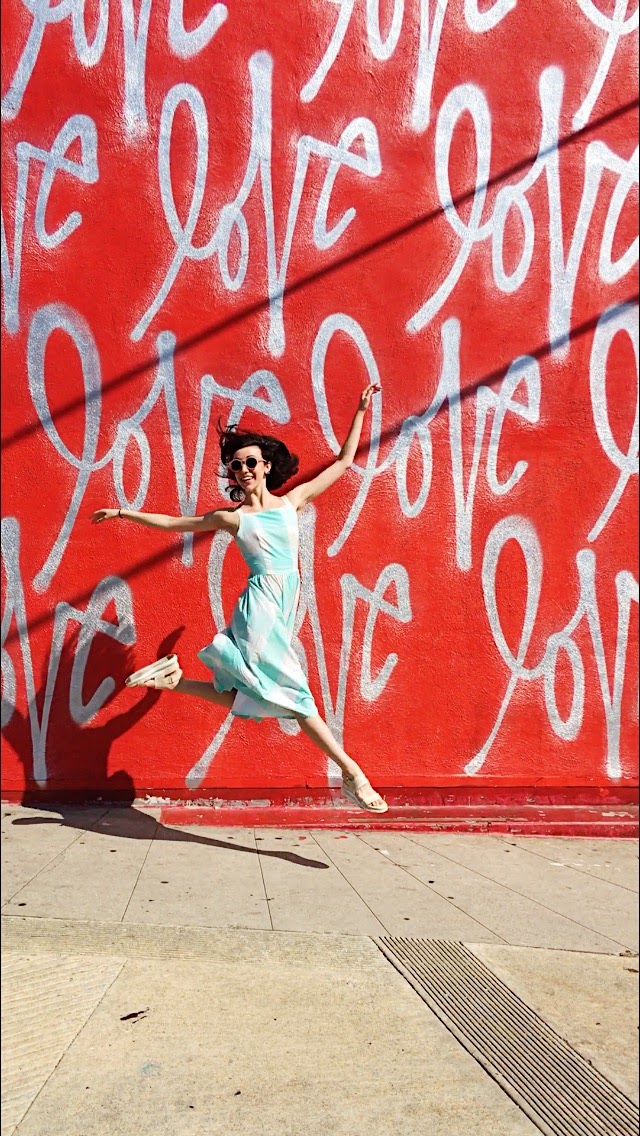
Madeleine Purcell is a professional ballet dancer who has danced with Sarasota Ballet, Tivoli Ballet in Copenhagen, and at Oklahoma City Ballet. She received her professional training from American Ballet Theatre’s Jacqueline Kennedy Onassis School and from Ballet Academy East in New York City. Madeleine is also the creator of Little Bird Skirts, a dancewear company that makes highly distinctive and fashionable dance rehearsal skirts and headscarves; as if she isn’t multitalented enough, Madeleine is also a dance writer whose articles have been featured in Pointe Magazine.
1. To get off to an unconventional start, please write a haiku that describes what dancing feels like to you.
Peace and happiness,
Gosh it sometimes hurts my body...
Fully worth it, though.
2. How did you get into dancing? How did you become a professional dancer?
My mom grew up dancing and danced professionally in her twenties. I was fortunate enough to have a small studio in my hometown that really let the students explore movement and dance. This led to me wanting to dance more, so I moved to a studio that performed The Nutcracker! Performing was such a wonderful experience when I was younger, and I loved trying to perfect the movements. It wasn’t until I was about twelve or so that I realized that ballet was something you could do as a career, and from then on, I set my sights on it until I made that dream a reality!
3. Did dancing help you through anything difficult in your life?
I’ve had two injuries in my dancing career, and while neither were particularly serious (requiring no more than 3 or so months of rehab), those experiences have reframed how I approach my dancing and my respect for the physicality of the career. Not being able to dance because of an injury was one of the hardest things for me when I was younger, but as I progressed, I realized that in order to protect yourself, sometimes those pauses were necessary and more often than not led to a deeper understanding of certain aspects of the craft. It’s never easy to experience that pain, but being forced to break down your technique into portions that won’t hurt your injury was one of the most enlightened moments in my career. It really forces you to put perspective on what’s really important: perfect “textbook” technique or nuanced artistry?
4. What obstacles have you had to overcome to continue pursuing your profession?
My first year at JKO, I very nearly wasn’t asked back. I’m still not sure if it was too big of a class or just that I wasn’t as advanced as some of my peers, but being told that I was too old to remain in my level and not good enough to move up ended up lighting a fire under me to improve by leaps and bounds, no matter what the cost. To date, my work ethic and dedication is something I’m very proud of. I may be blessed with “legs and feet,” but to quote one of my first teachers, “Now you have to do something clever with them!” It took a long time to learn how to control my long limbs: the longer you are, the harder it is!
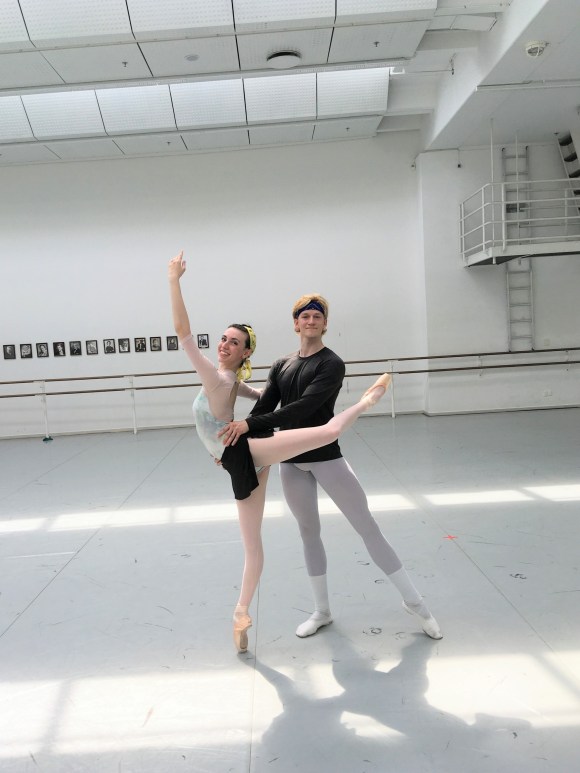
5. Tell us your funniest story about the dance world.
I very nearly messed up my first company audition by walking out because I confused my audition number! I was in a different state and had made it all the way down to the final cut, and previously they had been going through the numbers in numerical order. On the final cut, they passed the order my number should have been in, and I stopped listening because I was dejected and thought I had been cut. But as it turns out, one of my friends stopped me from walking out because she had heard my number (one away from hers), and so I got to finish the audition!
6. In your time as a dancer, what’s the craziest thing you’ve ever had to do?
Oh my. To date, probably performing Paquita pas de trois in someone else’s pointe shoes!! And I don’t mean a maker I don’t like or a size that wasn’t quite right…I mean quite literally a completely different size and brand of pointe shoes I had never before worn, that someone else had broken in, all because I had forgotten my own shoes on the day of an outreach performance!! Believe it or not, it ended up going quite well, because the pressure was on and I had no other choice!
7. What would you say to someone who is hesitant to go see a ballet performance?
I’d ask them to evaluate why they’re hesitant! Is it because they’re not sure what to expect? Worried that they won’t find anything in common with the story? The divide between what many Americans conceptualize as high art and what constitutes ballet as an art form can be a huge issue for the performing arts. In truth, the history of ballet is steeped in trying to convey universal emotions: love, loss, betrayal, passion; so what could be more uniting than going to see a live performance where these emotions are personified? Between the music and the dancing, I think many of us are moved by the utter beauty that is presented onstage, so I wouldn’t worry too much about not understanding the story or the history! So long as the arts continue to bring joy and beauty, we want to be able to continue sharing our daily joy with as many people who want to see it!
8. If you had only one sentence to convince someone of the importance of the arts, what would you say?
No matter what the story, you will be moved.
9. If ballet had a slogan, what would it be? Or if you had a slogan, what would it be?
There is beauty in the imperfection!
Responses edited by Adelaide Clauss
 Dancers Are