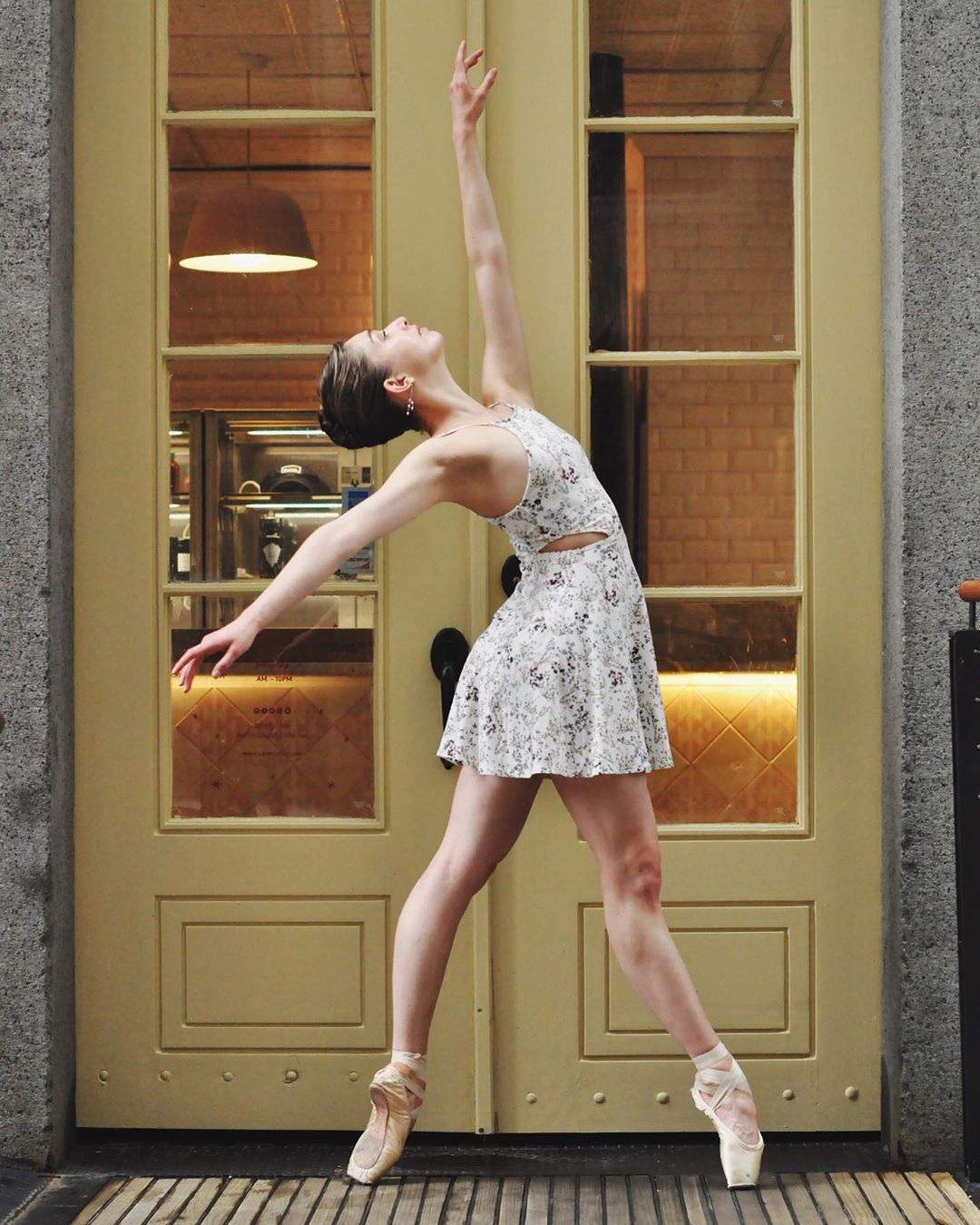
Stephanie Sorota, from Glen Rock, New Jersey, is a professional dancer with The Washington Ballet. She received the majority of her training from Petrov Ballet School in Waldwick, New Jersey. After graduating from high school (as the salutatorian, no less), she moved to DC to join The Washington Ballet as an apprentice. In her limited spare time, Stephanie manages to take college courses and is also a talented visual artist, creating beautiful ballet-themed drawings.
1.To get off to an unconventional start, please write a haiku that describes what dancing feels like to you.
Two steps forward and
One step back the eternal
Dance of progression
2. How did you get into dancing? How did you become a professional dancer?
My mom had danced her whole life, so when I was probably around three, she enrolled me in dance classes. At that point, my mom still took ballet classes once or twice a week, and my dad would sometimes bring me to watch her. There was one small door you could use to see into the classroom, and I was definitely too young and too obnoxious as a child to actually watch. What I do remember is dancing around in the lobby to the music that was being used while my mom was taking class. When I was old enough, I told her, “I want to go to a real ballet school, like you.” I was very serious about doing well in my dance training because I have always loved dancing, but until I was about eleven, I never considered it as a career. (The career path I wanted for a long time was to become a veterinarian actually.) I started taking class once or twice a week with Johanna Butow (a former dancer of American Ballet Theatre), and she was the first person I recall truly learning the intricacies of ballet technique from. There was so much to do, so many things to work on! For the first time I remember thinking, “I could spend the rest of my life doing this.” That transformed into knowing that I wanted and needed to dance professionally. I was fortunate to train in a studio with wonderful teachers and be mentored by the owner of the studio, Eugene Petrov. I was also lucky to be surrounded by talented, hardworking, and passionate dancer friends. I got my position with The Washington Ballet through one of many, many cattle-call auditions I went on during my senior year in high school. Afterwards, I was asked to go down to Washington, DC to take company class and was offered an apprenticeship with The Washington Ballet. I’ve been dancing happily with TWB ever since.
3. Did dancing help you through anything difficult in your life?
I had some personal family issues growing up, right around the time I decided I wanted to train with the goal of becoming a professional dancer. Dance gave me something during that time that I will always be grateful for. It was a passion and a focus. It was also a quiet place I could go to and think of nothing more than how to make each step better. It kept me mentally strong, and it gave me a purpose beyond myself.
4. What obstacles have you had to overcome to continue pursuing your profession?
When I was younger, I was diagnosed with scoliosis and had to be braced for it from age eleven to age thirteen. It caused many issues with my strength and alignment, as a student and on into my professional career. As a professional dancer, I began working with the lovely Suzanne Koucheravy, who has been helping me through scoliopilates learn how to best align my “curves” as I dance. Presently, I am struggling to work through an overuse injury, which has been plaguing me for several months. This injury (fortunately I suppose) has been my first prolonged injury, and it was challenging for me to dance every day knowing firstly, that I would be in pain and secondly, that I could be making the injury worse every day I continued to dance. The recovery process has also been maddeningly slow, but I am beyond grateful for the guidance and support from TWB’s physical therapist, Megan Poll, and for this weird pause in my normal life to have the time to recover slowly.
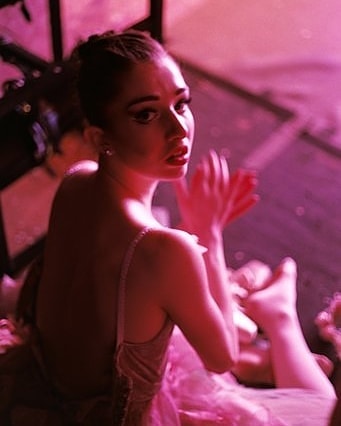
Image: Olivia Lipnick
5. Tell us your funniest story about the dance world.
In The Washington Ballet’s Nutcracker, the Spanish dance has a partnered saut de basque manège* at the end. It kind of feels like what I would imagine being in a blender is like, honestly. Anyway, the costume is a layered, high to low, ruffle skirt, which can be pretty long on some of the shorter dancers (me). I do not know how in the world this happened, but on the last partnered jump of the manège, I landed with both of my feet caught inside of the skirt. I was completely tangled, but in my mind, I knew I had 0.2 seconds to run around my partner before the next and final step of the dance. Somehow, I managed to untangle myself. The funniest part? No one noticed!
*editor’s note: Towards the end of the Spanish dance in The Washington Ballet’s Nutcracker, all six dancers move around the floor in a circle with the women performing a series of partnered jumps.
6. What would you say to someone who is hesitant to go see a ballet performance?
Ballet will speak to the humanity in you, whether you enjoy it or not. And if you don’t enjoy it? It’s art! When was the last time you enjoyed every piece of music you listened to? Or every book you’ve read? Go again, watch more. You will find a piece that you enjoy, and it will speak to you. You don’t need to be a balletomane or a dance historian to understand the emotional purpose behind a piece of dance, you just need to be human.
7. If you had only one sentence to convince someone of the importance of the arts, what would you say?
What is the world without the expression of beauty, pain, nature, and humanity?
8. If ballet had a slogan, what would it be? Or if you had a slogan, what would it be?
“You win some you lose some” would be ballet’s slogan. Sometimes, as a dancer, you finish your rehearsal day, class, or performance feeling absolutely great. Other times you know in your heart of hearts that you can do better than the work you just did. “You can learn something from this” is my personal motto for these feelings, because as long as I can learn from whatever the day brought me (dancing or otherwise) I’ve accomplished something. And being on a constant journey of discovery is one of my absolute favorite things about being a dancer.
Responses edited by Adelaide Clauss
 Dancers Are