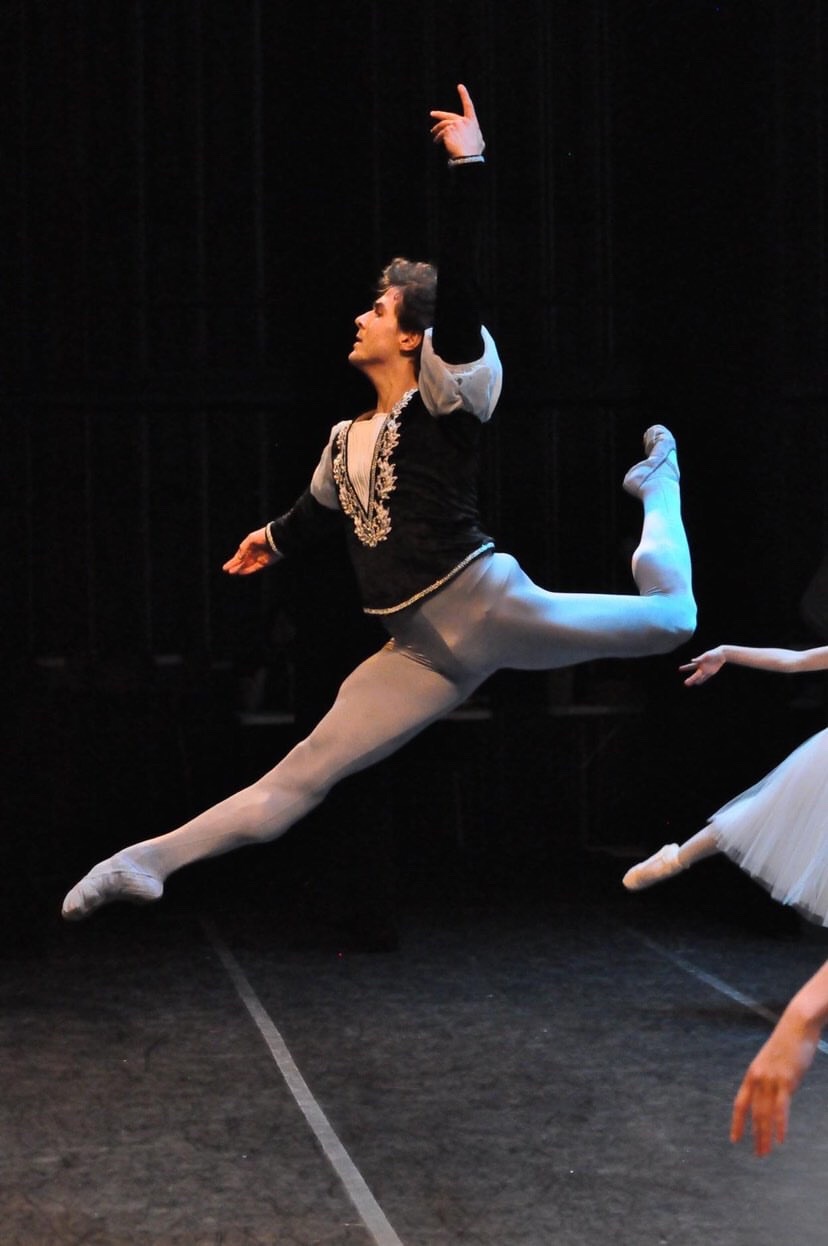
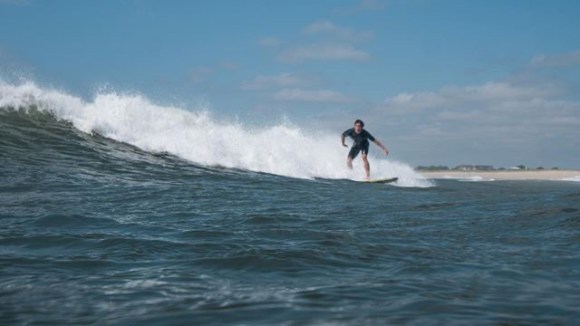
Alexandros Pappajohn (“Alex”) is a professional dancer with The Washington Ballet. Prior to this, he danced in American Ballet Theatre’s studio company after training at the School of American Ballet and Ballet Academy East in NYC. In his limited free time, he takes college courses at Georgetown University and loves to go surfing whenever he gets the chance.
1. To get off to an unconventional start, please write a haiku that describes what dancing feels like to you.
Flying through the air
Immersed in a character
A different world
2. How did you get into dancing?
I was exposed to ballet at a very early age through my mom, who was a professional ballet dancer. Through a combination of looking at pictures of her dancing that were put up around the house and being around discussions about ballet that she had with her friends, who were also former dancers, I developed a sense of how demanding ballet dancing was and developed a deep-respect for ballet dancers from a very young age. However, despite my unique exposure to ballet, I was not interested in actually trying it out until I was ten or eleven years old. At the end of elementary school, I began to lose interest in tennis and football, the two sports that dominated my early athletic experiences. In my search for a new activity that I might enjoy, and with my understanding of the athletic challenges of ballet, I decided to try it.
3. Did dancing help you through anything difficult in your life?
Throughout most of my childhood and adolescence, I had very little confidence in myself and let my own self-doubt permeate almost every aspect of my life. Consequently, I avoided working hard for something or “trying” as I didn’t want to experience the seemingly inevitable outcome: defeat or failure. Ballet, with the structure and direction it provided for me, in combination with a few of my ballet teachers who gave me both encouragement and held me to a standard to which I would have never held myself, helped me overcome this insecurity. I loved being in ballet class, yet didn’t have the confidence to take my own talent seriously. In continually holding me to high standards, and showing me their unwavering optimism about my abilities, my teachers gave me a really healthy space in which I wasn’t afraid to push myself in something I really enjoyed. I gained both the confidence in myself that I needed to explore so many other avenues in my life as well as the ability to see past self-doubt and trust the process of hard-work.
4. Tell us your funniest story about the dance world.
A few years ago, I went to a competition in Florida. While most competitors went to the competition with their coaches, who followed them and helped them through all of the activities during the competition, I went with my father. Therefore, I got really confused when other competitors started telling me that they had met my “coach,” and thought he was very cool…especially, when they started telling me about the conversations they had with him about all of the variations, activities of the competition, and just ballet-specific stuff in general. One competitor even told me that he was talking to the other coaches about his opinions on technique and style…Everyone seemed to think my father was a legitimate coach who had a real ballet career. For the record, my father has never put on a pair of tights in his life. He has never been a professional ballet dancer, and the only experiences he has had with ballet have been through watching me dance and hearing about it at the dinner table.
5. What would you say to someone who is hesitant to go see a ballet performance?
Ballet is so unique because it requires both athletic and artistic ability. When you go to see a ballet, you are seeing athletic artists. You are seeing people that have devoted their lives to understanding, pushing, and exploring their bodies for a kind of expression that no other artist or sports player has achieved. There is nothing like it.
6. If you had only one sentence to convince someone of the importance of the arts, what would you say?
The Statue of Liberty, a piece of art, is perhaps the most important symbol of freedom and democracy in the world.
7. If you had a slogan, what would it be?
A quote by Friedrich Nietzsche: “He who has a why to live can bear almost any how.”
Edited by Adelaide Clauss
 Dancers Are