
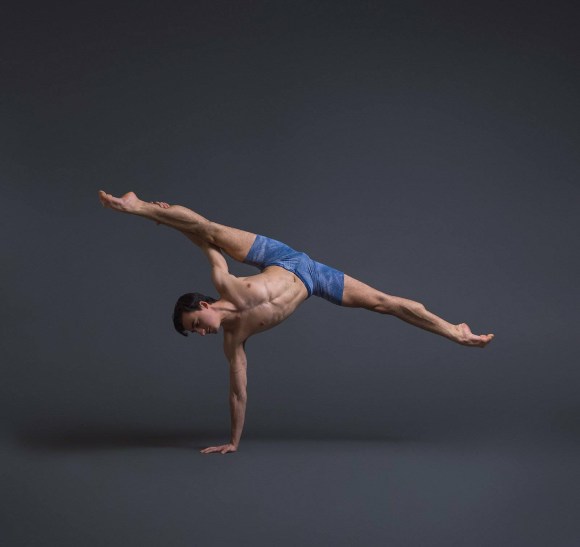
Carlos Gonzalez, from Madrid, Spain, is a professional dancer with American Ballet Theatre. When he was just 19 years old, he moved by himself to NYC to become a member of American Ballet Theatre’s Studio Company. He received his early dance training from The Fortea Conservatory of Madrid and later attended The Royal Conservatory of Dance Mariemma in Madrid.
1. To get off to an unconventional start, please write a haiku that describes what dancing feels like to you.
Dancing is a drug
You can never get enough
A rush of pure joy
2. How did you get into dancing?
I started dancing when I was 6 years old, simply because I had no interest in playing soccer like the rest of the boys normally do at that age. A group of my friends from school suggested that we sign up for dance classes as an after-school activity two days a week. For three years, we danced sevillanas, jotas and other traditional Spanish dances. When I was 9 years old and had never done ballet before, my mother, who thought I had rhythm and was decent at dance, decided to sign me up to audition for a professional dance conservatory in Madrid. At first I was angry at her, because she didn’t say anything to me about it. Now I thank her every day, because there has been no day since then that I’ve regretted doing that audition or choosing this profession.
3. Did dancing help you through anything difficult in your life?
Dancing has helped me in many moments during my life, but I think there are two moments that I remember the most. The first one was in my last year of high school, when I had exams practically every week. I slept less than six hours a day and had to dance from 9am to 3pm Monday to Saturday, all while going to high school from 4pm to 9:30pm Monday through Friday. Those six hours of dancing every day made all that effort and work that year worthwhile. And of course, the year I moved to New York and joined the ABT Studio Company was very hard for me…I didn’t speak English perfectly, I didn’t know anyone, and my family and friends were 6,000 km away. I only had ballet, which I focused on 24 hours a day. That helped me get through that year, during which I missed Madrid incredibly. Ballet made the sacrifice of starting a completely new life less difficult. That year I learned the most about myself and the things I previously didn’t think I was capable of.
4. What adversities have you had to overcome to continue pursuing your profession?
I think that most of the obstacles that male dancers have to overcome throughout their lives are quite common, especially when it comes to bullying and being called all sorts of things. For me, being from a country where soccer dominates all sports and aspects of society, it was quite hard not having any interest in wanting to learn the sport. When I started dancing at 6 and then continued with ballet at 9 years old, boys always asked me why I did ballet if ballet is for girls. At first, this irritated me a lot and made me fight with many boys. Over time, I learned to ignore those comments and continue with my passion, regardless of their opinions such as dance not being worth anything, dance not being a career with a good future, or dancers not being able to make any money. I never cared about any of that, because I’ve always known that’s what I wanted to do for the rest of my life (or at least for as long as my body and mind allow me to). And of course, I always had the unconditional support of my family and close friends. Another adversity I faced was the lack of money at home to go see performances or travel to other countries for summer intensives. I had to adapt to what my family could afford for me, even though I have to say they always did their best to give me everything I needed to keep learning and growing as a dancer. And ultimately, I think the feeling of being homesick when I first moved to the U.S. was really challenging for me. However, as I started feeling more comfortable with the language, meeting some awesome people, and creating friendships, I built my new life here and that feeling of missing home went away over the years.
5. Tell us your funniest story about the dance world.
I think the funniest story I have is the time I fell on stage doing consecutive tombé pas de bourrées in the peasant dance at the end of Act I of Giselle. I remember that the music was going very fast, and I tripped over my own feet! As fast as I fell, I bounced off the ground even quicker. It was also the only show that Natalia Osipova came to dance as a guest artist that season, and I felt much more ashamed because I thought I had ruined her performance. Luckily, the stage is full of other dancers doing the same step at the same time, and nobody really noticed it. Actually, I’m happy with the giggles caused by my fall that performance, and since it happens to everyone at some point in their careers, I didn’t make a big deal out of it. I’m also glad I didn’t get hurt.
6. In your time as a dancer, what’s the craziest thing that has ever happened to you?
The craziest thing that’s ever happened to me was on ABT’s tour to Los Angeles in July of 2018. We had three performances of Natalia Makarova’s Bayadère, and I was supposed to dance some corps (ensemble) roles. However, after finishing the spacing of Act I on the day of opening night, one of our ballet masters called me and said they needed me to do the Bronze Idol/Golden Idol* in the dress rehearsal of Act III in two hours. I had a 15 minute rehearsal with another ballet master to go over the choreography; they needed someone to learn the role because some of the other casts were injured, and they asked me just in case the other remaining casts ended up injured, as well. So there I was going crazy- my first opportunity as a corps dancer to demonstrate what I was capable of, with only 15 minutes of preparation. Without thinking about it too much and letting the pressure affect me, I went out and did the variation in the dress rehearsal. You can imagine the result…👎🏼😂 But I did it as best I could given the situation, and even though I didn’t show my best, I am proud that they thought of me for that emergency situation. In the end, I didn’t have to do any of the performances, since two of the other dancers doing the role ended up being able to dance. But, I am very grateful for the opportunity that they gave me to dance that variation on stage.
*editor’s note: the Bronze Idol is a famous soloist (featured) part in La Bayadère
7. What would you say to someone who is hesitant to go see a ballet performance?
I would encourage them to spend at least five minutes watching a ballet video online, while trying to have an open mind and get carried away by the music. People should allow the movement of the dancers to facilitate all kinds of emotions: joy, sadness, melancholy, anger, rage, love or boredom. Because ultimately, ballet exists to make audiences feel something – this is enough of a reason to give it a chance. One would be surprised at how many people who have never seen ballet could enjoy their first five minutes, then ten, then half an hour, then an hour…I hope that these viewers would buy tickets to see live dance someday.
8. If you had to convince someone of the importance of the arts, what would you say?
Who wouldn’t like to be transported to another world where anything is possible, all emotions and feelings are accepted, the present feels even more present, and every thought can be reflected through sounds, movements, or images? That is the power of art. Are you sure you want to miss it?
9. If you had a ballet slogan what would it be?
Consistency is the key to success, so work as hard as you can to become a better dancer than you were yesterday, all while enjoying every second of the present so you can look forward to the artist you will become.
Responses edited by Adelaide Clauss
 Dancers Are